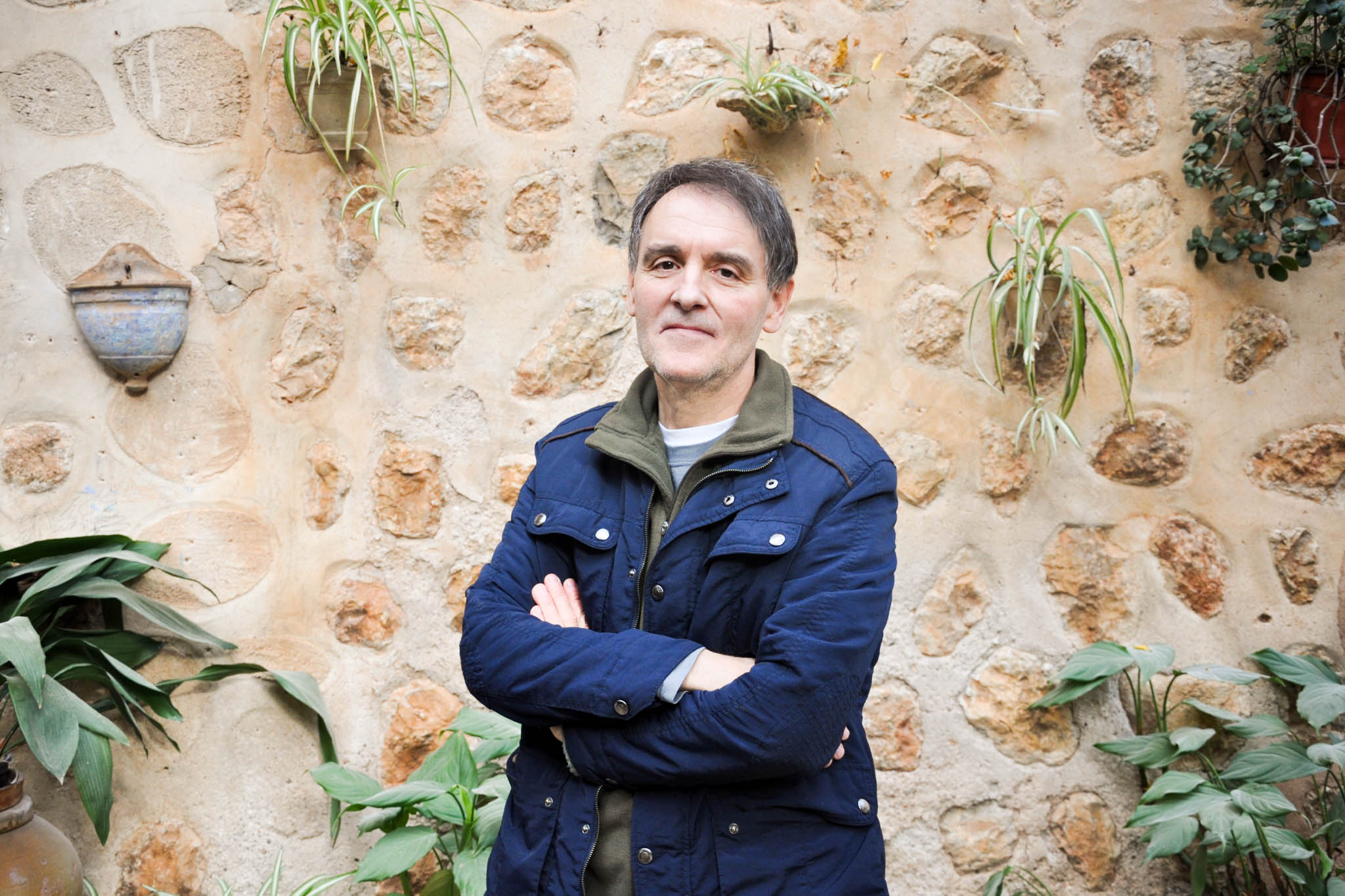
At a time when Mallorca is caught between competing pressures — mass tourism and local life, economic survival and environmental limits, short-term gain and long-term responsibility — the question is no longer whether balance is possible, but what it actually looks like in practice. For Sóller native Tomeu Deyà, the answer is neither theoretical nor ideological. Rooted in a family whose connection to olive oil and oranges goes back more than four centuries, and shaped by years working in tourism and with UNESCO, he has spent his life navigating the space between past and future. At Can Det, agriculture and tourism are not opposing forces but part of the same working model — one built on continuity, care and the belief that living in Mallorca carries obligations as well as rewards.
You were born into a long-established Sóller family, but you also studied and worked abroad. How did those early years shape you?
I was born in Sóller, actually at home. Before the tunnel, the town was very isolated from Palma and many mothers simply didn’t have time to reach the hospital. I studied locally until bachillerato, then moved to Barcelona to study Economics at university, followed by a Master’s in Business Communication at Stirling University in the UK.
As a child I was curious about many things — at one point I wanted to be a vet — but over time my interest shifted towards economics and business, particularly in an international context. But even while studying and working abroad, I always felt connected to the family’s traditional activities of olive oil and oranges. Can Det already appears in municipal archives in 1560, giving us more than four centuries of documented history, which is clearly reflected in our family tree.
My parents played a decisive role. They passed on a strong sense of effort, responsibility and modesty — values that shaped how I approach both work and life. Living elsewhere was never really part of my plan. I always felt my place was here, even if I needed time abroad to gain perspective and experience.
You have a background in tourism and speak several languages. How did that come about?
I’ve always been very interested in communication. I quickly understood that the best — often the only — way to truly connect with people from different cultures is to speak their language. Most people only manage one language, so if they don’t speak yours, you need to learn theirs.
I’m proud of my two native languages, Spanish and Mallorquín. After English, I immersed myself in German and, once I felt comfortable, decided to build on that experience by learning Russian. At the time I was travelling to Russia for work, during the period when many Russians were visiting Western Europe. Needless to say, the situation has changed since then.
When did you decide to focus fully on olive oil production?
I’ve mostly lived in Mallorca, although I spent time abroad for my studies and work. But I never stepped away from the family’s traditional activities of olive oil and oranges. That continuity has always been there.
How much oil do you produce each year?
The oil mill works for many olive growers and families who bring their olives for their own consumption, which can amount to up to 50,000 litres. Our own production, which we sell locally and to visitors, can reach around 7,000 litres per year.
What does the olive harvest depend on?
Mainly on weather conditions, and on how much time and care you dedicate to the plantations.
Why is your oil so distinctive?
Our tradition is to press riper, black olives. The key is pressing olives that are ripe but very fresh from the tree. That’s what gives the oil its particular character.
How large are your olive and orange groves?
We own around 15 hectares in the mountains of the Sóller valley.
Tell us about your work with UNESCO.
After my time as director of the Serra de Tramuntana World Heritage Site from 2012 to 2015, I joined ICOMOS, the advisory body to UNESCO. This allowed me to remain actively involved in world heritage.
What is the most interesting part of that work?
I participate in evaluations and assessments of World Heritage sites around the world, which gives me a very broad perspective on different cultures. At the same time, I run Can Det Cultural Visits, which has become our main activity. Through guided visits and tastings, we share our spaces and products with visitors who are genuinely interested in understanding what we do.
What does a typical day look like for you?
When I’m not travelling or attending online meetings for ICOMOS, I organise the guided visits to Can Det — managing bookings and enquiries, and making sure everything is ready to offer a good experience.
What are the main challenges you face?
Offering high-quality interpretation. Visitors need to feel engaged and interested throughout the experience, and that requires constant attention and effort.
Have there been challenges along the way?
One of the most difficult decisions came in 2010. After 15 years as director of the Mallorca Tourist Board, I decided to leave in order to create a long-term survival plan for Can Det together with my brother. I focused on tourism, while he concentrated on agriculture. That balance is what has allowed us to move forward.
I’m very aware that I live in a paradise, and that owning family properties and traditional activities carries a deep responsibility towards future generations. Maintaining them requires effort. The easy option would be to sell, but once you sell a house or a finca, it’s gone forever.
What are you most proud of?
I’m proud of the values inherited from my parents — the culture of effort to achieve success, always combined with respect and modesty.
What do you think about the protests against mass tourism in Mallorca?
Mallorca’s economy, and therefore its survival, depends almost entirely on tourism, directly or indirectly. As a host community, people have the right to express concerns about tourism’s impact. However, those calling for a completely different economic model have not yet presented a viable alternative capable of sustaining the current population.
That said, tourism does need improvement. Issues such as carrying capacity, water management, clean energy and limiting certain activities all need to be addressed.
What plans do you have for the coming year?
We will continue researching ways to improve our business while maintaining high levels of client satisfaction. We strongly believe in local products and the circular economy.
What is your goal in life?
These days I think more about my children’s future than my own. We try to pass on the same values, and so far they are doing well, studying at international universities.
How do you see Mallorca in 2040?
The island has undergone more transformation in the last 70 years than in the thousands before that. Now, however, growth limits are broadly accepted, and I’m confident Mallorca will remain a paradise.
The challenge is to move towards sustainability and a regenerative culture — not as a business strategy, but as a real shift in mentality and attitude.