
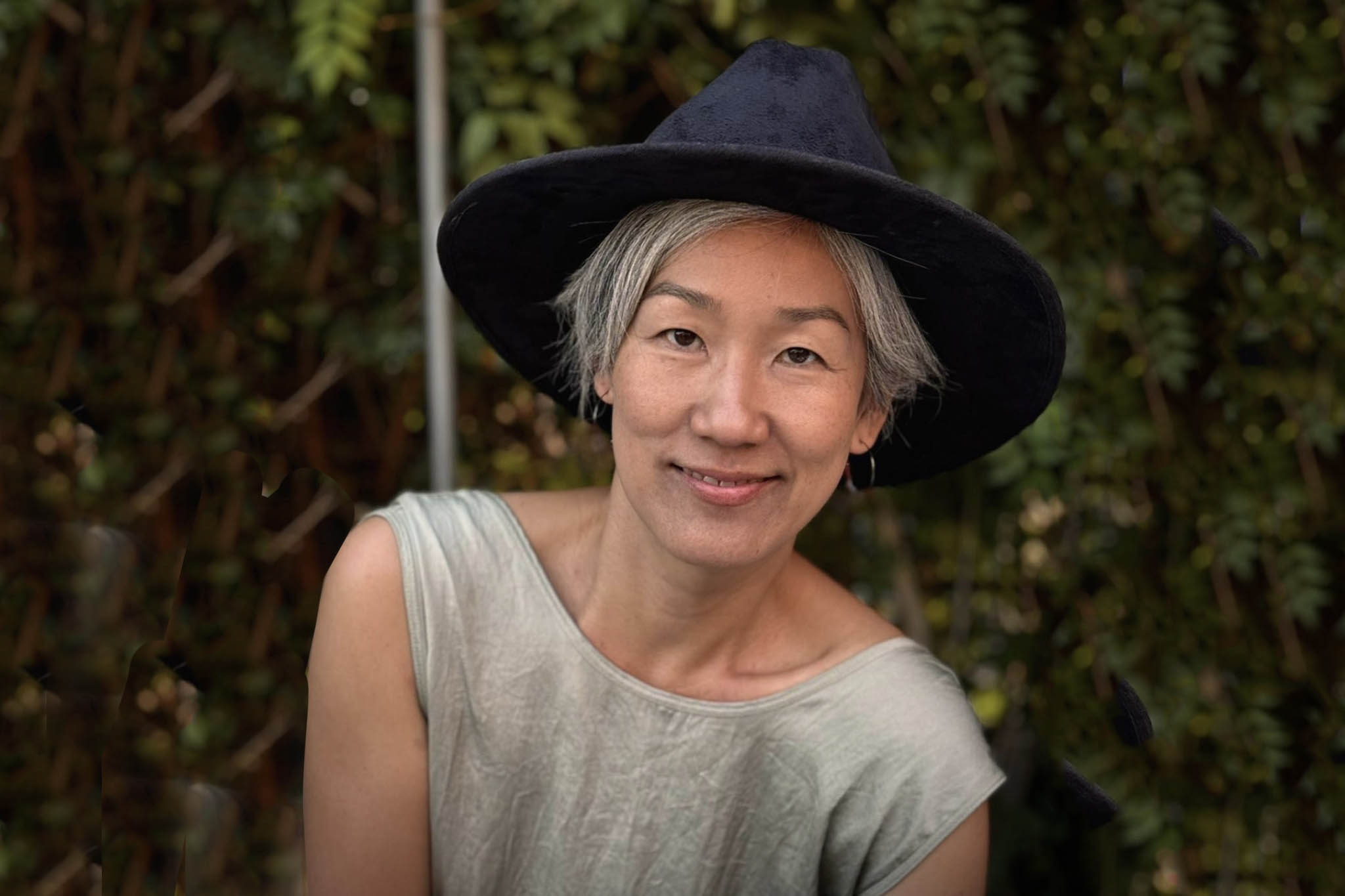
Miram Choi describes herself as many things at once: a life stylist, creative producer, kimchi maker, occasional cook, problem solver, and mother. Born in Kentucky to Korean parents, she has spent her life adapting, recalibrating, and building something out of uncertainty.
When she moved to Mallorca in 2018 with her husband and young daughter, the plan was simple enough: set up a production company in Europe and fly back and forth to the US making films. Instead, a pandemic, industry strikes, and immigration hurdles forced constant reinvention. What followed was not the career path she imagined — but one that rooted her more deeply on the island than she ever expected.
Miram spoke to Humans of Mallorca about arriving alone with a toddler and a dog, navigating bureaucracy without the language, cultural shocks large and small, and why Mallorca — for all its contradictions — became home.
Where were you born, and what were you like growing up?
I was born in Kentucky of all places — famous for KFC and bourbon, but not Asians. Even though I’m American, I’m also Korean, and life was definitely interesting growing up there. On the positive side, it taught me to be humble and tough. I wouldn’t change any of it. I think it’s good to go through life’s challenges and learn how to overcome them.
As a child, I wanted to be a veterinarian, like most kids who love animals. I tried to save every animal I could — even mice. I also wanted to be a dancer, but my mom didn’t support that idea because it wasn’t seen as a stable career. I still try to save animals when I can, and I still dance — just when no one’s watching.
My parents were very honest, hardworking people. My dad was an engineer and inventor, and my mom a seamstress. They struggled a lot after moving from Korea to the US and sacrificed everything to give their children a decent life. Things weren’t easy, but they did their best.
What’s your profession — and how did you end up doing what you do now?
My profession? I’ve never been quite sure! I’m still figuring that out.
I started working very young — babysitting at ten, then my first official job at fifteen as a hostess in a Chinese restaurant. I never stopped working and often had multiple jobs at once, doing whatever I could to help pay for school and life. By the time I reached adulthood, I’d already built a lot of practical skills.
I’ve always been creative. I studied interior design and worked independently, then moved into fashion, styling for photo shoots and commercials. Eventually I came back to what I was best at — styling homes and people.
I still do that on the side, but our main focus now is the film business and personal passion projects. So yes, you could call me many things: a life stylist, creative producer, kimchi producer, sometimes cook, problem solver, and mother.
Why Mallorca?
My husband was working mostly in Europe, and we thought it made sense to base ourselves somewhere in the EU so we could set up our own production company and produce our own films.
Choosing Mallorca was actually quick and a bit random. We were looking for a place that met all our needs: easy access to the rest of the world, a film industry that hadn’t been tapped into too much yet, and a safe place for our child.
We first considered southern mainland Spain, but then I remembered Mallorca. I’d never been, but I’d heard about it when we lived briefly in Barcelona for work. I did my research and realised it was perfect. And honestly — why not? It’s a gorgeous island.
The plan was to fly back and forth between Mallorca and the US making movies. Then Covid hit and everything stopped. Travel shut down, and so did the industry. We stayed, thinking it was temporary. Then came the writers’ strike, then the SAG strike, and suddenly there was no work at all. That created real financial stress.
I took whatever work I could find — making kimchi, cooking Korean food, styling houses and people. On the bright side, it kept us in Mallorca, which turned out to be a blessing in disguise. Now, after many years, the industry is finally opening back up, and we’ll make films again.
What was the move itself like?
We decided very suddenly and had never even been to Mallorca. My husband had booked a six-month filming job in Germany, so we tried to move before he left — but in the end, he had to go early.
That meant I was left to close our life in Los Angeles, pack everything, and travel to Mallorca alone with twelve large bags, a toddler, and a dog.
I arrived on an island I’d never visited, without speaking the language, not knowing the culture, and knowing just one person — luckily. It was extremely challenging, but completely worth it.
I didn’t have a car at first, but I lived near the train line and walked everywhere. I actually lost five kilos just from walking. I’d already secured a school for my daughter and an apartment five minutes away, which was a lifesaver.
We arrived in 2018. It took just over a year to open our production company, Greenstone Films S.L., and find a house to run it from.
At that time, there were hardly any Americans here. Someone once told me I was one of only five Americans they’d met in three years — and it was even rarer to be Asian American. Not so much anymore.
Back then, most Americans didn’t even know Mallorca existed. Ibiza, yes — but not the rest of the Balearics. Now I go back to the US and everyone wants to come here. Celebrities are buying homes, and that brings everyone else with them. Honestly, I liked it better before. It felt less commercial.
What difficulties did you face once you were here?
The hardest thing was getting our NIE. My husband wasn’t here, and he was technically our legal anchor. He worked two jobs back to back and didn’t arrive properly until eight months after we moved. He visited on weekends, but that didn’t help with paperwork.
He had a British passport, and we barely made it through before Brexit. Without an international lawyer, it would have been impossible.
Language was another challenge. I was sometimes shunned for not speaking Mallorquín, and a few locals went out of their way to embarrass me. I found that harsh, although I understand the bitterness that comes from mass tourism and rising prices. There are pros and cons to every kind of change.
Then there were the daily surprises: never getting siesta times right, going out to run errands when everything was closed, eating dinner far later than we were used to. In the US, we’d eat around 6pm — here, nothing opened until 7:30, and kids were still out at midnight or later. That was a real culture shock.
What surprised you most about the people in Mallorca?
You’ll meet the occasional local who isn’t fond of internationals, but overall I’ve found people to be open and kind. They say you’ll never be invited into a local’s home, but I believe if you open your heart and your door, people respond in kind.
I love the people here — locals and expats alike. They feel like family to me: warm, generous, and genuine. Our community includes people from all over the world, and we’ve been incredibly lucky.
I love Mallorca for many reasons — the beauty, the beaches, the culture, the food — but most of all, the quality of life.
And looking ahead — what’s next?
I’ll keep working towards my goals: making great films, doing things that bring positive change into the world, making things beautiful, and enjoying life while doing it.






