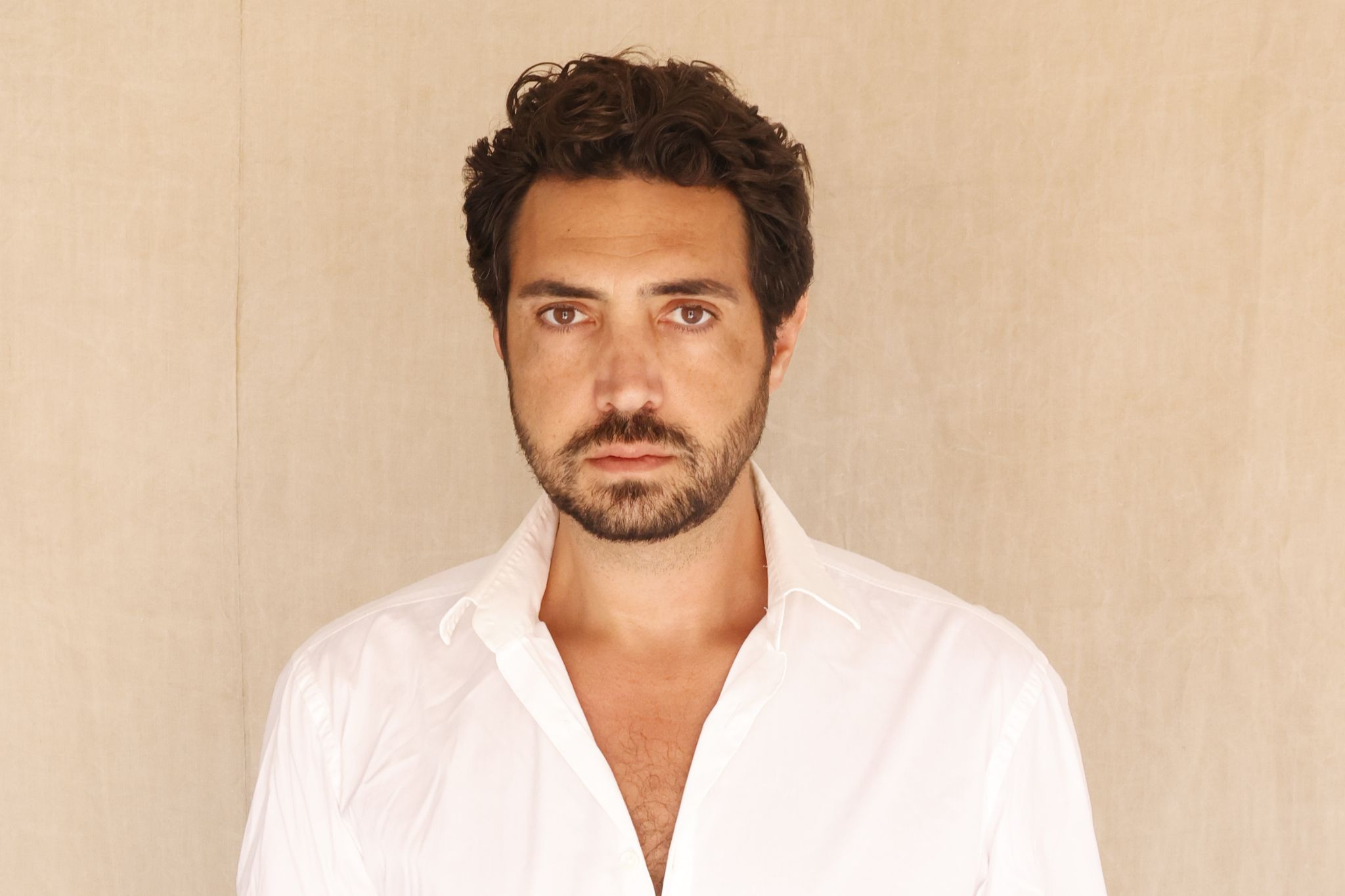
Jeremy Schinazi knows what it means to operate at scale. He also knows when to slow down, to savour time and space. For nearly two decades, the Paris-born entrepreneur has worked at the highest levels of global brand-building, shaping strategy and identity for luxury, fashion, and beauty brands across multiple continents. He began his career as an Art Director at Fred & Farid Advertising and, at just 27, became Vice President and Head of Digital at FCB — one of the world’s largest advertising networks, with offices in 95 countries and more than 9,500 employees. Entrepreneurial by instinct, he later founded a creative technology hub operating across Paris, New York, and Hong Kong.
Four months ago, Schinazi moved with three children to Mallorca. Not as an escape, but as a conscious recalibration. From Palma, he is preparing his next venture — rooted, local, and ambitious — while reflecting on leadership, transformation, failure, and what it takes to build something that truly lasts.
How did you choose your profession?
I’ve always been drawn to identity, how things become what they are. I stand between vision and execution, translating intuition into form. My work lives where strategy meets creation.
What’s the most interesting thing about your job?
Transformation. That moment when a person or a brand suddenly clicks into clarity. I work for that spark. And I love that I’m always learning new territories, new industries, new ways of thinking.
You were born in Paris and studied across France and the US. How did your early years shape you?
I was born in Paris, a city that teaches you early how to dream, and how to endure. For a long time, my path seemed decided. I would become a lawyer, like my father, and his father before him. The Civil Code sat on my nightstand. Certainty felt inherited.
But some callings are quiet before they are urgent. While studying law, I realized I was shaped by something else: culture. Words. Images. Music. The way stories move people. I needed to shift.
I left for Miami. I studied art and business while working on my first creative projects.
My parents had given me responsibility, the grounding kind. They taught me that life is not about what you accumulate, but what you contribute. It empowered me to become an entrepreneur, to want to build and impact people, society.
As my ambitions grew, so did my understanding of my limits. Ideas need people. Vision needs structure. After working across Europe, the US, and Asia, I returned to Paris to study leadership and complex management, then later strategy and growth at Stanford Graduate School of Business, in Silicon Valley.
I never really stopped learning, what you know and experience shapes who you become and eventually what you accomplish.
What was your first real professional success?
The first time someone said, “You changed everything for us.” That was the moment I understood my work had real impact.
What difficulties have you faced along the way?
Uncertainty. Responsibility that felt heavier than my resources. Moments of doubt. Times when I had to let go of things I loved in order to grow. Business is simple compared to human relationships. The higher the stakes, the sharper the tensions.
Were there moments when you didn’t know how to go on?
Of course. Many. Entrepreneurship is a long dialogue with doubt. But I believe failure is not the end, it is another chapter of becoming. Optimism is not a mood. It is survival.
How did you overcome those moments?
Resilience, and necessity. When you have a company, a family, a life to carry, you keep going. And I have been held by love, my children, my closest circle. That support is everything.
What did those experiences teach you?
Anything built without inner grounding eventually collapses.
If you want to hold more light, you need to build a stronger vessel.
Why did you move to Mallorca, and why now?
I have three children. We moved for quality of life, sunlight, rhythm, nature, not as a luxury, but as a responsibility. Mallorca gives space to breathe. It lets life breathe. The sea slows the mind. The light clears the heart. Here, work doesn’t drown life, it blends with it. And it’s inspiring. I feel a creative revolution happening inside me here, new ideas, new ventures calling.
What does a typical day look like for you now?
I wake early, move a bit, and start working while my mind is clean and bright. Lunch is social, business or just humans around a table. Afternoons are calls and meetings, but at 4:30 pm I’m at the school gate. Every day.
Then homework, cooking, playing with my kids, reading, maybe a movie, and we go to bed early. Family sets the rhythm.
What are you most proud of?
My mini tribe. Leni, Nolan, and Eliot are beautiful humans, inside and out. I learn so much from them; they inspire me to become a better person. The life we are consciously building. The courage to choose what matters. The small daily improvements. The slow growth of the soul.
What are your plans for this year?
To strengthen health, presence, and joy, and to build my next venture here. Rooted, local, ambitious.
And your goal in life?
To create. To elevate others. To love deeply. And to leave something meaningful, not in scale, but in essence.