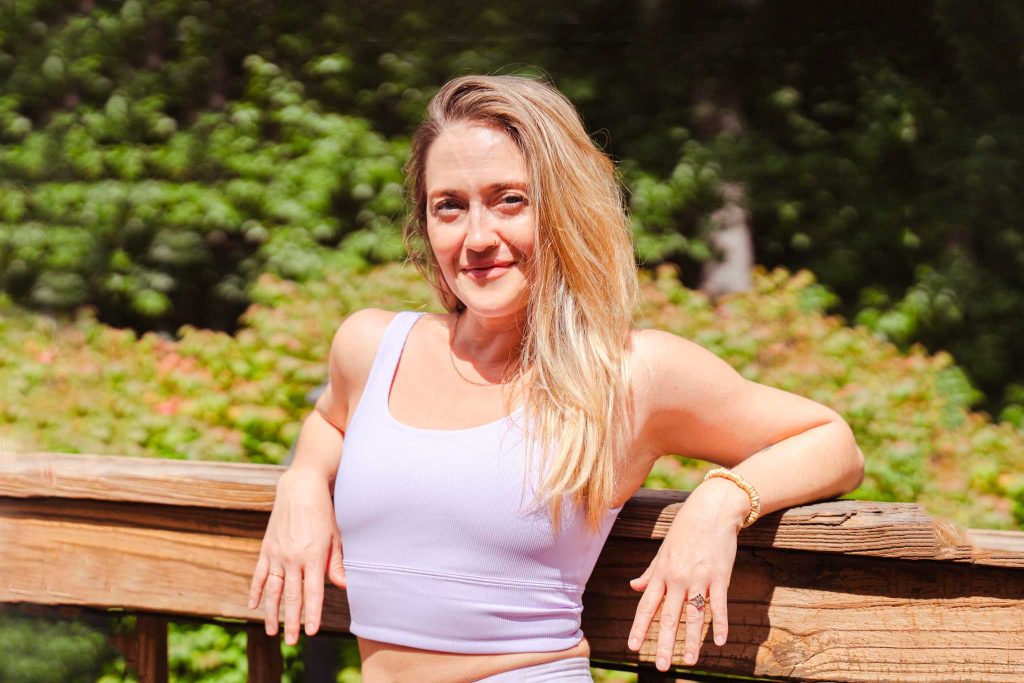
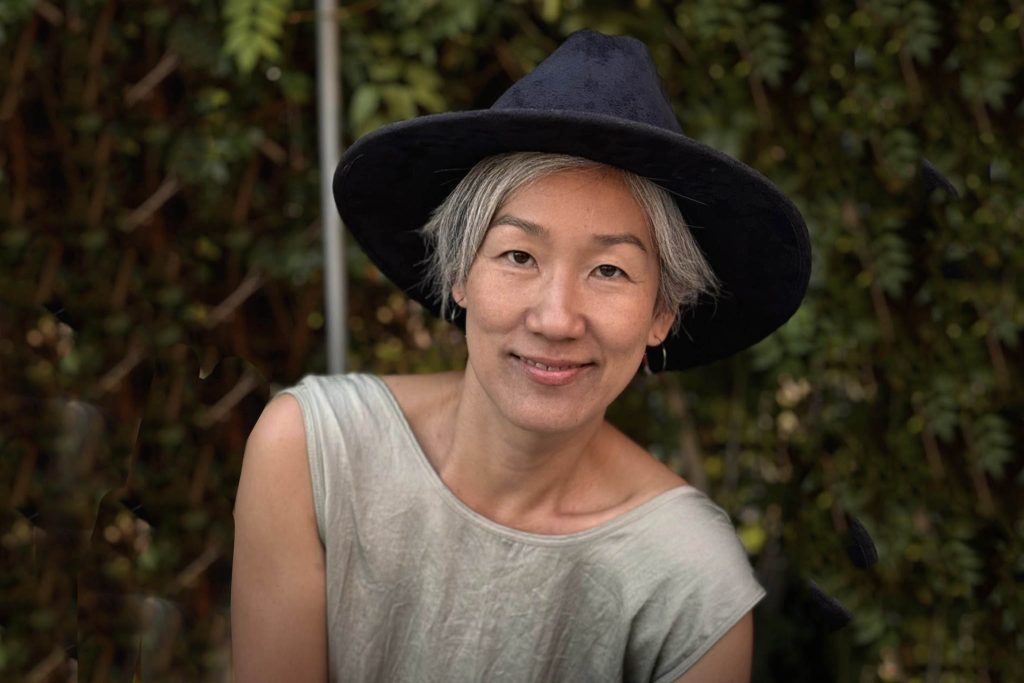
At a moment when images are increasingly generated, accelerated, and automated, Olga Fefilova’s work moves in the opposite direction — toward slowness, attention, and embodied craft. “For me, photography remains a human, tactile process,” says the artist. Known under the creative pseudonym Olova00000, she doesn’t treat the medium as a conventional profession, but as a way of staying awake to time, transformation, and the quiet fractures of reality.
Born in St. Petersburg and educated across Russia, the UK, Spain, and Germany, her life has been shaped by movement and re-calibration. She came to Mallorca for love in 1997. Now, nearly three decades later, the island remains the place where her artistic identity continues to unfold.
How did you get into photography?
My grandfather was a professional photographer, among other things. From him, I learned that creativity is not a hobby, but a way of inhabiting life.
I also fell deeply in love with darkroom photographic processes — still, for me, a perfect combination of miracle, science, patience, and darkness. I remain happily addicted.

What is the most interesting thing about your job?
Being an active observer — living on the edge between action and inaction.
I photograph where worlds collide: the visible and the invisible, the viable and the unviable. I am drawn to processes rather than results, to time, nature, transformation, and environments in motion — to what is becoming, not what is already fixed.
I don’t chase stories. I stay attentive to life. To small fractures in reality, to objects or situations that feel slightly out of place. This way of looking becomes a practice in itself — a constant state of alertness, curiosity, and presence.
How do you work — and what does “process” mean to you as a photographer today?
My practice is rooted in photography as a traditional, craft-based act. I work with both digital and analogue cameras, constructing images through physical, in-camera processes rather than computational generation.
Glass mirrors, reflections on water, magnifying lenses, multiple exposure, coloured crystals, and distorted reflective surfaces function as optical instruments — tools that bend light, fragment perception, and introduce tension in real time. I do not use artificial intelligence or generative systems; the image is not synthesised, but encountered.
Post-production remains within classical photographic parameters, serving the image rather than fabricating it. Everything happens in front of the lens, through the body — through gesture, presence, and attention.
Having begun my practice before the rise of AI, I find it revealing that such distinctions now need to be named. For me, photography remains a human, tactile process: slow, imperfect, and irreducibly embodied.

Where were you born, and how did your early life shape you?
I was born in the endlessly surprising and deeply beloved city of St. Petersburg — a place that educates your soul in beauty, endurance, and contradiction.
As a child, I wanted to be a surgeon. That ambition collapsed the day I fainted in kindergarten while witnessing a blood test performed on my best friend. The message was clear: I required a bloodless vocation.
My father is a naval engineer. His work took him across many countries, almost always accompanied by my mother. From my parents, I received curiosity, a strong sense of self-worth, and a deep respect for individuality. Growing up, I observed the anatomy and endoscopy of my parents’ almost unconditional love. For a child, this is an education in itself.
Where did you study?
I was educated across several countries — Russia, the United Kingdom, Spain, and Germany — Bournemouth, ILC Cambridge, and Oxford Brookes University in the UK; the Escuela de Turismo de Baleares in Mallorca, Universidad Alfonso X el Sabio in Madrid, CEF — School of Audiovisual Arts / Escuela de Artes Audiovisuales Mallorca, Spain; and Frankfurt am Main in Germany.
Each place shaped a different layer of me — through academic structure or cultural shock. Both were essential to my evolution as an artist.

When and why did you move to Mallorca?
In 1997, I moved here because of a love story. That story unfolded into many years of marriage and profound self-development. Even when love changes form, gratitude remains.
Where do you live now, and what does the island give you?
I live in Mallorca, and I’m genuinely in love with the island. It has been nurturing me, inspiring me, and parenting me for almost three decades.
Describe a typical day.
Meditation, a healthy breakfast, and yoga — in no fixed order — are essential. Reading is non-negotiable. Engaging with my artistic processes is mandatory. Connection with nature is vital.
Everything else is beautifully random.

What was your first professional success?
Winning competitions and exhibiting in art hubs like Rome or Florence is always reassuring — a gentle confirmation that your chosen direction is intelligible to others.
How have you dealt with life’s challenges?
I see life as a grand adventure. Being up is exciting. Being down is exciting too — just with a different soundtrack.
What matters is how I interpret these states. That perception is editable, and I work on it daily.
From an early age, I searched for my inner axis — an internal beam capable of holding me upright while everything else was in motion. That search emerged from necessity: changes of countries, growing up without parental support of any kind, and assuming full responsibility for my own life from the age of 16.
I understood early on that stability would not be given to me — perhaps never…
That search took many forms: martial arts, yoga, meditation, psychoanalysis, and multiple disciplines of self-development and self-construction. Each practice became a tool; each teacher, a mirror. Along the way, I searched persistently — and often without success — for a tribe, for mentors I could truly trust.
I learned how to trust teachers.
I learned how to trust myself.
And, much to my dismay, I also learned how to survive without a tribe. My way of seeing and questioning the world rarely fit the contexts surrounding me. I was constantly searching for new ways of being — for new forms, new meanings, and the quiet permission to do things differently than they had been done before. That relentless inner inquiry gradually shaped a solitary path.
Yet as you construct your own subjectivity, something subtle begins to happen: you start encountering people with affinities closer to your own. This process requires patience. A tribe cannot be forced, nor should it be pursued. It appears when the inner structure is ready to sustain it.
Becoming a solitary player — my own witness, my own support system — was deeply formative and strangely empowering. But with time, I understood something essential: being supported by other humans expands you, life becomes richer, more layered, and more alive when it is shared.

What are you most proud of?
I am proud of having the audacity to recalibrate my life when it stopped being true.
The restructuring of the company where I was employed marked a rupture. It could have been read as a failure, a loss of ground, a moment to retreat. Instead, it became an opening. What arrived as misfortune revealed itself as permission: the moment I allowed what had lived quietly in the margins — a private passion — to step forward and claim its place as my primary field of action.
Beginning a new career in my forties — studying Photography Direction at CEF School of Audiovisual Arts, surrounded by students much younger than myself, becoming self-employed and entering the unfamiliar territory of artistic photography and art — was humbling, destabilizing, and demanding. It required courage, discipline, and a willingness to feel out of place. To be inexperienced again. To be visible while still becoming.
But it was also unmistakably aligned.
This decision is part of my ongoing work: the conquest of my own subjectivity, day by day. Not as a slogan, but as a practice. A refusal to live on borrowed structures or inherited narratives.
I am proud of striving for radical authenticity.
Of remaining loyal to myself — and betraying myself as little as humanly possible.
That, for me, is success.
Do you like to travel?
Passionately. Travel is the fastest shortcut to perspective, tolerance, and compassion.
Next destination? Possibly interplanetary travel. Why not?

What are your plans for this year?
This year is about consolidation and precision. Deepening my photographic practice, developing coherent bodies of work, and placing them in contexts where they can truly be seen — exhibitions, publications, and collaborations that allow the work to exist beyond the image itself.
I am focused on refining my visual language, working with time, transformation, and environments in transition, while remaining open to what appears unexpectedly. Less noise. More presence. More intentional risk.
What is your goal in life?
My goal is not a place. It is a way of being.
To remain awake… To see what others overlook. To cultivate depth, meaning, and radical honesty. To keep choosing curiosity over certainty and authenticity over safety.
Life, for me, is a series of openings — ruptures that become opportunities, silences that become images, ordinary moments that become revelations. The goal is simple and impossible: to keep living as a witness, a maker, and a believer.
Photos by Olga Fefilova (Olova00000)