
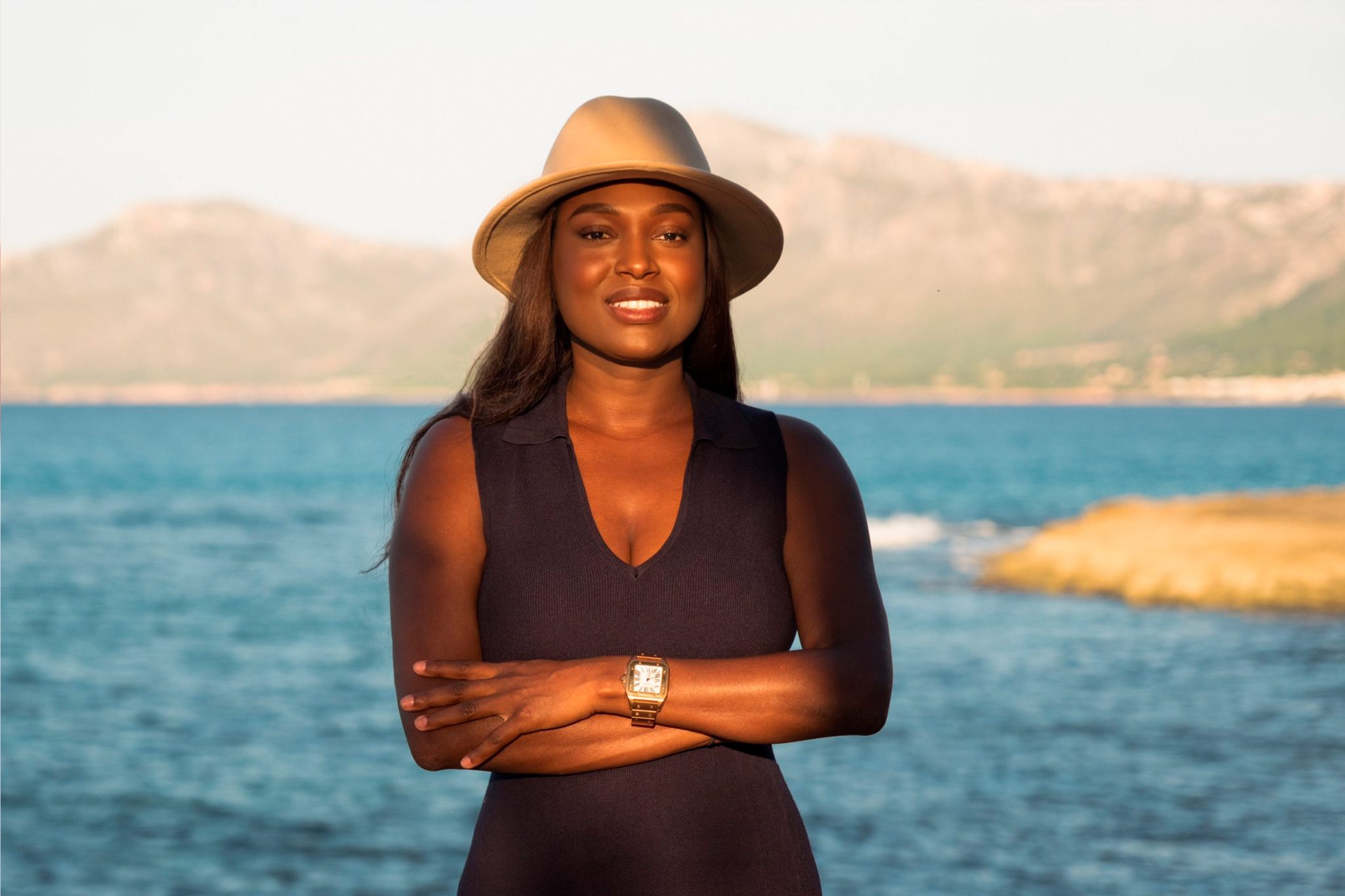
When life fell apart, Nahomie Jean Louis did something radical: she moved to an island she’d never seen before. From that leap of faith came 1923, a members-only cultural community in Mallorca that blends creativity, healing, and connection. With roots in Miami and Haiti and a background spanning law, herbalism, and entrepreneurship, Nahomie has built a life that’s both grounded and visionary — showing that beauty can grow from what once seemed lost.
Tell us about your beginnings — where you grew up and what shaped you.
I was born in Miami, a city full of cultural energy and Caribbean influence, but I spent much of my early childhood in Haiti. Both places shaped my identity deeply. My parents are Haitian immigrants who worked tirelessly to give me and my siblings opportunities. My father built his own business from scratch, and my mother managed its day-to-day operations. From them I learned resilience, faith, and the importance of building something that lasts — but also the value of slowing down when life demands it.
What did you study and how did that path evolve?
I studied nursing and political science with a minor in Cuban politics at Saint Thomas University, then went on to specialize in international human rights law. More recently, I earned a certification in herbalism — a return to my roots and the ancestral practices I grew up with. My legal work taught me structure, discipline, and empathy; herbalism reconnected me to something soulful. Both inspired Bloom Mallorca, my slow-living and herbal lifestyle project.
Was creativity part of your life early on?
Always. As a child, I wanted to be both an artist and an entrepreneur. I’ve always had a way with words, art, and music, and I loved creating spaces for people to connect — even hosting a fashion show fundraiser at 16.
How did your professional life take shape?
It wasn’t a single decision but an evolution. Law gave me stability and a way to help people, while entrepreneurship allowed me to express creativity. Owning Café des Fleurs in Miami was a turning point — my first successful business, where I partnered with brands like Macy’s, Chanel, and Estée Lauder while building a real community space. That experience gave me the confidence to keep creating.
What challenges have you faced along the way?
Being a woman navigating fast-paced industries and building something from scratch — often alone — hasn’t been easy. The hardest moment came during and after my divorce. I felt completely lost and broken.
How did you overcome that?
I moved to Mallorca, even though I’d never been here before. I turned inward — journaling, reading, therapy, and long walks in nature. Solitude became my teacher, and Mallorca itself became a healing force. That process taught me that no matter how hard life becomes, we always have the power to rebuild ourselves.
What are you most proud of?
I’m proud of 1923, not just as a space but as proof that I can transform pain into beauty. It’s my way of bringing people together through culture, conversation, and creativity.
Where do you live now, and what does the island mean to you?
I’m moving from Son Serra de Marina to Sant Llorenç. Son Serra was a place of healing and new beginnings; Sant Llorenç feels like grounding — a place to root and build. The island has given me space to heal, create, and grow a community. Mallorca has a soul. It’s slower, rooted in tradition, and the balance between sea and mountains makes it unlike anywhere else I’ve lived.
Describe a typical day.
I start with a morning jog on the beach and, when it’s warm, a swim in the sea. After breakfast, I focus on 1923 — planning events, writing newsletters, or creating content. I take a siesta mid-day to recharge, then meet collaborators or switch to my U.S.-based legal work in the evening. I always end with dinner and a glass of wine to close the day.
What’s next for you this year?
I want to expand 1923 both in Mallorca and internationally, publish my book about my healing journey, and keep recording my podcast.
What are your thoughts on the protests against mass tourism in Mallorca?
I understand them. Tourism is vital but it must be sustainable and respectful of local life. I believe in cultural tourism — where people come not just to consume but to connect and contribute.
Do you travel much?
I love traveling. I’ve been to Vietnam, Thailand, Egypt, Jordan, Israel, Morocco, Greece, and many more. I’m fascinated by European history and want to explore more of it.
How do you see Mallorca in 2040?
I hope Mallorca in 2040 remains authentic — with its traditions, landscapes, and community spirit intact. My dream is for the island to lead the way in sustainable living, where tourism and local life coexist harmoniously and the island’s soul endures for generations to come.






