
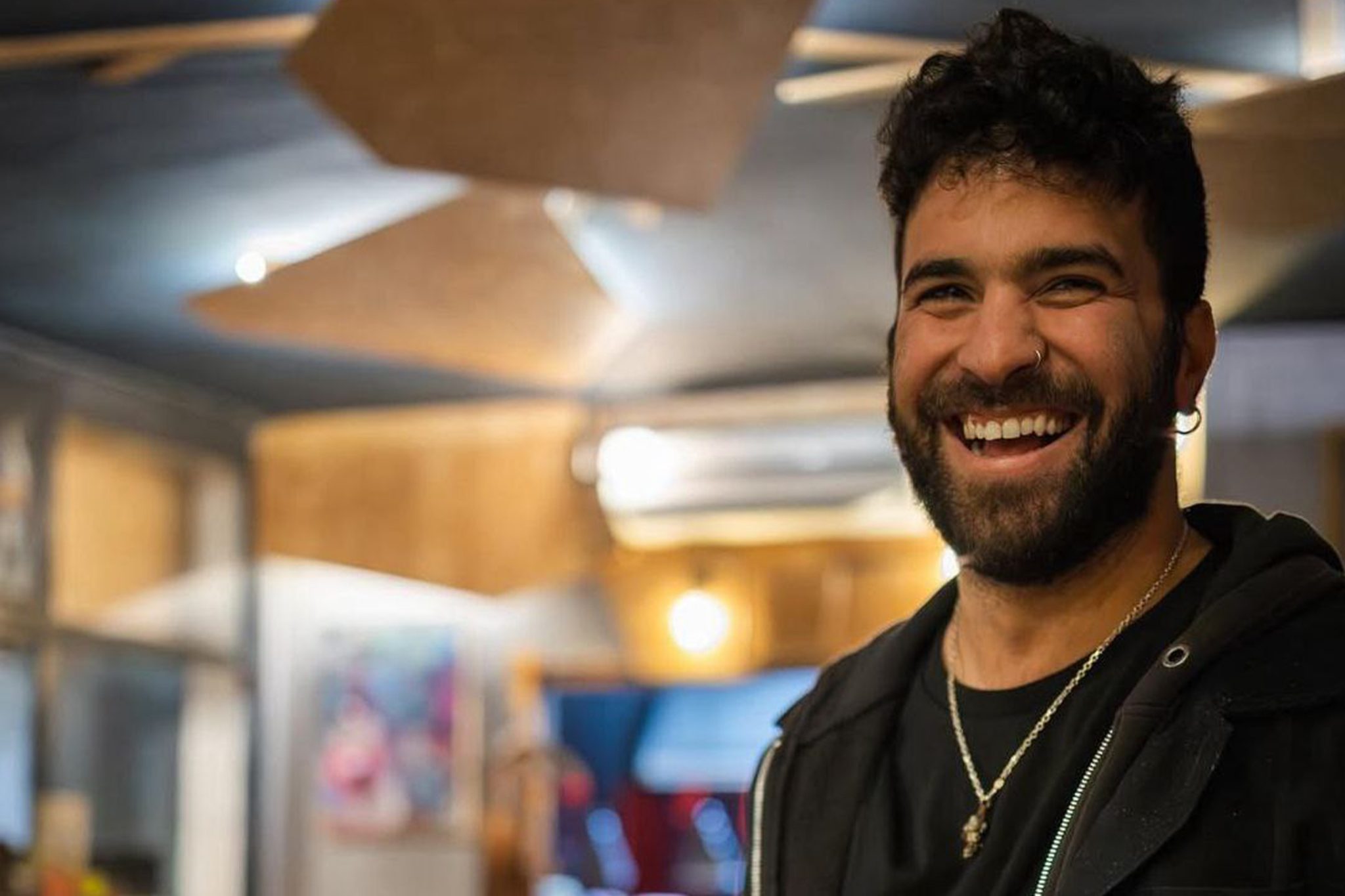
At Terrae, a small experimental restaurant in Port de Pollença, Venezuelan-born chef David Rivas cooks as if the planet depended on it — because, in a way, it does. His “zero-waste” philosophy isn’t a marketing slogan; it’s a way of life. From recycled furniture to olive-wood-fired cooking, every detail at Terrae speaks to sustainability and purpose. Featured in the Michelin Guide for four consecutive years, Rivas’s kitchen is more laboratory than restaurant — a place where conscience meets creativity, and every meal, says David, “carries a message”.
Tell us about your beginnings — your family and how you discovered cooking.
I was born on Margarita Island in Venezuela. My Italian grandfather loved to cook, and so did my father — but my mother didn’t, which, since I lived with her, probably pushed me to start. I grew up watching cooking shows on TV and dreaming about European kitchens, especially when the movement of experimental dining began to take off.
What path did you follow to become a chef?
I studied at Escuela Hofmann in Barcelona, then went to Oslo for an internship at a traditional French restaurant. Everything there was new and fascinating — more advanced, more disciplined. The cooking I do now is very much inspired by Scandinavia. Beyond making something tasty, it’s about creating something that carries a message. The Nordic chefs were among the first to talk seriously about sustainability. My mother studied sociology, so perhaps that shaped my sense of responsibility through food.
After Norway, I moved to Hong Kong for a sous-chef position in a 15-cover restaurant doing creative tapas. Later, when my partner got pregnant, we moved back to Norway, where I worked at the Gastronomik Institute — a place for competitive chefs to train in techniques and chemistry. That experience helped me understand food as both science and story.
Do you use those techniques today at Terrae?
Not much. Here it’s more relaxed and rooted in traditional methods — confit, smoking, fermentation. Space is limited, and those older techniques make sense: fermentation preserves and even improves, while the fridge reduces quality. We cook with olive wood — not just the wood itself, but its residual heat. It’s practical, but also poetic.
Would you say Terrae is a form of activism?
Yes, in a quiet way. I define Terrae as a space where I can protest — to show that things can be done differently. The floor and tables are made of recycled plywood, which is cheaper and more sustainable than cutting fresh wood. The plates and napkins are made by local artisans. The only thing we still import are glasses, because no one on the island makes them yet. About 70% of our ingredients come from Pollença itself.
You’ve been featured in the Michelin Guide for four years. Do you see that as success?
I’m grateful, but I don’t call it success. Success can make you complacent. For me, Terrae is a utopia — a path you walk knowing you’ll never fully arrive.
How did you end up in Mallorca?
I came here because my partner wanted to move here. We came with our family, and I needed to stay fulfilled in my work. In Norway I worked in incredible places with amazing people, and here that was missing. So I decided: if I can’t find that, I’ll create it myself.
What has been a difficult moment in your life, and how did you overcome it?
There have been many. What helped me most was learning to let go — and knowing that, ultimately, everything has a solution.
What are your dreams for the future?
I’d like to start a vegetable garden project, ideally with someone passionate about permaculture. We already use very little meat, and when we do, we use the whole animal. Still, I often ask myself whether we should go further — maybe serve lamb just once a week. It’s about timing and integrity.
For Mallorca, I dream of creating a foundation that offers free hospitality training for people with fewer opportunities — immigrants, those struggling to find work. There’s a shortage of trained professionals here, and inclusion could change that.
And yes — I’d love to have a restaurant that uses only food waste: still-edible products discarded by supermarkets, turned into €5 menus. It would be a simple, radical way to reduce waste and change how people think about food.
Tell us about the Terrae Experience.
It began because people kept asking for more — more time, more conversation, more connection. The restaurant can get busy, so I created the Terrae Experience as a slower, more intimate format. It’s not just about feeding people, but sharing ideas in a way they can really absorb.






