
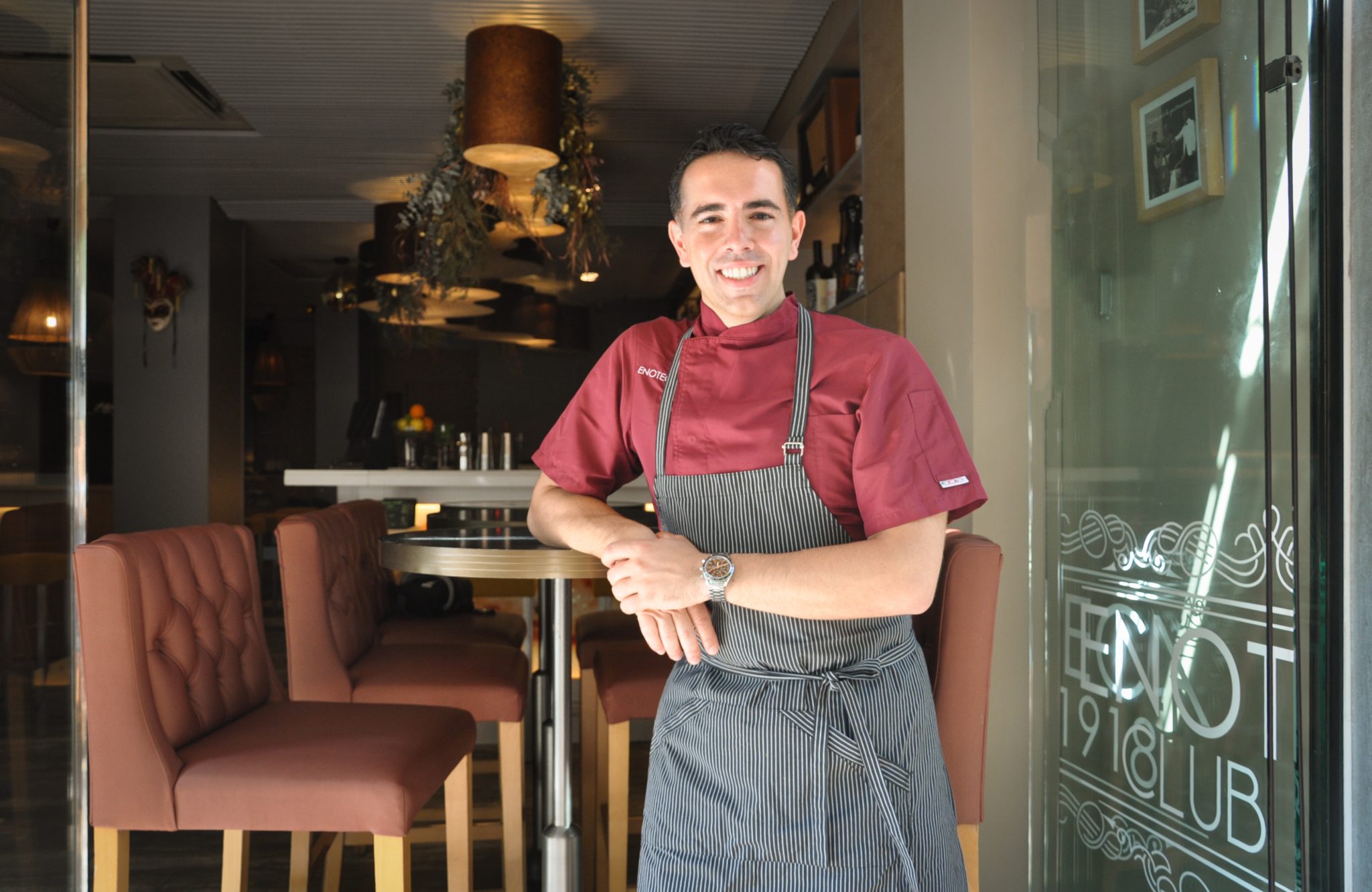
From a small village on Italy’s Adriatic coast to the heart of Santa Catalina, Manuel Caporale carries forward a proud family tradition as the fourth generation of dedicated restaurateurs. While his roots go back more than a century in Italy (1918), it was his father Michele who brought the family’s culinary passion to Mallorca in 1988. Today, as executive chef and owner of Enoteca 1918, Enoteca Club, Bianco e Rosso and Ristoro Grupo catering, Manuel continues that local legacy — building two beloved Italian restaurants that blend tradition, family, and dedication. He spoke with Humans of Mallorca about growing up in kitchens, the changing face of Santa Catalina, and his hopes for the future of tourism on the island.
Where were you born?
In Italy, in the Abruzzo region — near a small town called Francavilla al Mare on the Adriatic coast.
When did you move to Palma, and what was it like?
I came to Palma in 2001 to join my father, Michele Caporale, who had already been here since 1988. My first visit was meant to be just a weekend experience in the kitchen — but I ended up staying for the whole season. That’s when I really started working side by side with my father. Even though my parents later separated, my working relationship with my dad remained strong. We’ve always had a great connection — in the kitchen and with the customers. I learned by observing him. I put respect into everything I do, and he was my example.
What did you want to be as a child?
My dreams began in childhood, watching my father cook. I wanted to be a chef just like him. Now I have my own restaurants, and that’s how I continue the connection with him — and with his wife, Marcela. We work together every day. It means a lot to me.
Do you remember your first restaurant?
Yes — Bianco e Rosso, which started out as just a small pizzeria near my father’s place. It was just me and two women — one of them is now my wife, and we have a little son together. By a stroke of luck, I was able to expand into the space next door, and that’s how the restaurant as it is today was born.
Why did you choose Santa Catalina?
Back in the day, Carrer Fàbrica was just a regular street with cars. But in 2011 it was transformed into a pedestrian zone — and everything changed. More people moved in, opened restaurants, bought homes. There’s now a real mix of cultures here. I have customers from all over the world. Twenty years ago, it was mostly locals — the Santa Catalina Market was super traditional. But over time, the area has become more cosmopolitan. It’s like a little country inside Palma.
How do you see Santa Catalina in five years?
It’s already a double-edged sword. On the one hand, the scene here is great for the local economy. We have amazing restaurants, stylish shops, and new five-star hotels opening all the time. But for locals, it’s getting harder to live here. Rents are high, and the quality of life has changed. It’s louder, more crowded, and people are being pushed out of their homes. The area has lost some of its calm. So yes, business is booming — but it comes at a cost.
Can tourism and growth be managed better?
It’s a tough one, but I believe we need to focus on raising quality. That’s the best way to slow the mass-tourism boom. The kind of tourism you see in places like Magaluf — it damages the environment and costs a lot to clean up. We need visitors who respect the island. People who understand the culture, the food, and the history of Santa Catalina. Now is the moment to start telling the stories behind each place and business — to educate and inspire.
What are your business plans this year?
I started doing catering last year — weddings, events, private dinners. I’ve created a beautiful menu and I’m excited to grow that side of the business. The next step? Maybe boat service — who knows?






