
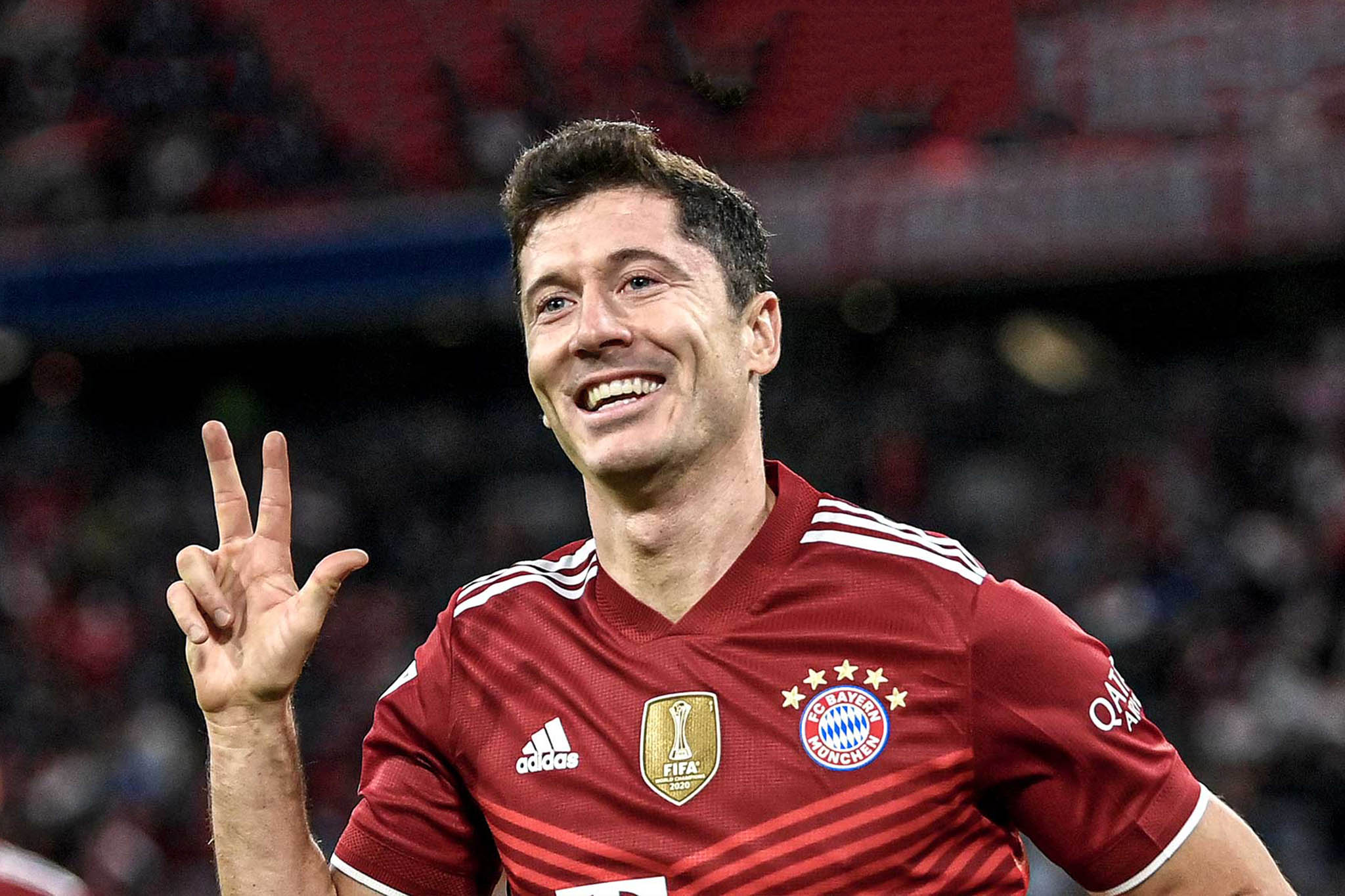
Goals demand noise, packed stadiums, floodlights, the roar of thousands of voices. Rest, by contrast, seeks silence. That may explain why Barcelona striker Robert Lewandowski sought in Mallorca something elite football rarely allows: the chance to disappear without truly going away. Here on the island, he’s not Poland’s all-time leading scorer, nor Bayern Munich’s record-breaking striker, but a father strolling with his daughters and a regular visitor who has learned to look at the sea as though it were an extension of his own home. Over time, Mallorca has become less a holiday destination than a place of return.
It is hard to pinpoint when that relationship began. Some trace it back to early escapes to Ibiza, others to recommendations from figures like Jürgen Klopp or Mats Hummels during Lewandowski’s Borussia Dortmund years, when the pressure of elite competition made disconnection a necessity. By 2015 he was already spending summers in the Balearics, often at sea, and from then on his visits became regular.
The bond eventually took tangible, concrete form in bricks and mortar. In 2021, before signing for FC Barcelona, Lewandowski bought a villa in Santa Ponça for around €3.5 million. Spacious but discreet, with no direct sea views, it was designed for privacy rather than display. In early 2025 he added a second property, this time in Camp de Mar (Andratx), reportedly for about €11 million: a larger villa with terraces open to the Mediterranean and access to secluded coves. The contrast between the two homes perhaps mirrors the striker’s priorities — first retreat, and only then contemplation.
In Andratx, where mountains and sea meet, Lewandowski blends easily into daily life. He is seen walking through Port d’Andratx, dining locally with his wife, Anna Stachurska — a former karate world medallist — and their daughters, or dealing with the minor inconveniences of everyday life, parking tickets included. Family celebrations, Easter visits, trips to Valldemossa or Puerto Portals — even an afternoon at the fairground — all unfold far from the frenetic world of elite sport.
Lewandowski is not alone in choosing Mallorca. The island has long attracted figures from European football, including Hasan Salihamidzic, Oliver Kahn, Bastian Schweinsteiger, Toni Kroos and Mario Götze. For many, it functions as an off-season extension of the northern leagues: a place to recover rather than compete, to balance intensity with distance.
These personal choices also intersect with wider demographic trends. Polish buyers have emerged as one of the strongest presences in Spain’s property market, the Balearics included, with demand accelerating after 2022. Mallorca, meanwhile, remains strongly shaped by its long-standing German presence, particularly in areas such as Santa Ponça, Camp de Mar and Port d’Andratx. Nearly 42% of all property sales in the Balearics now go to foreign buyers — a sign of how globalised the island has become, and of the tensions in a place increasingly reliant on, yet uneasy about, international tourism.
Lewandowski’s routine on the island is strikingly modest. He trains at the Santa Ponça FC ground as if he were just another player, posting occasional updates but largely keeping to himself. The discipline never disappears; it simply softens. Mallorca does not change who he is, but it lowers the volume.
At FC Barcelona, Lewandowski continues to build his legacy. At 36, he still delivers elite numbers, competes for minutes and goals, and remains central to the team’s ambitions. Yet these seasons now coexist with something less visible: a rhythm shaped by the knowledge that, when the campaign ends, there is a place where time is no longer counted in matches.
This may be why this story is not only about a goalscorer. It is about how territories absorb biographies, and also how certain lives end up reflecting collective processes. Lewandowski is part of Mallorca’s silent transformation — of its migratory flows, its property market, its international network of affections and capital. But at the same time, Mallorca has become an intimate part of his own biography.
Football leaves behind records and statistics. Life is built from routines, walks, and houses where the lights go out at night. Somewhere between public success and private refuge, Lewandowski settled on Mallorca. In doing so, he found something rare for a career spent sprinting towards the next goal: a space to rest.
Photo: Getty Images






