
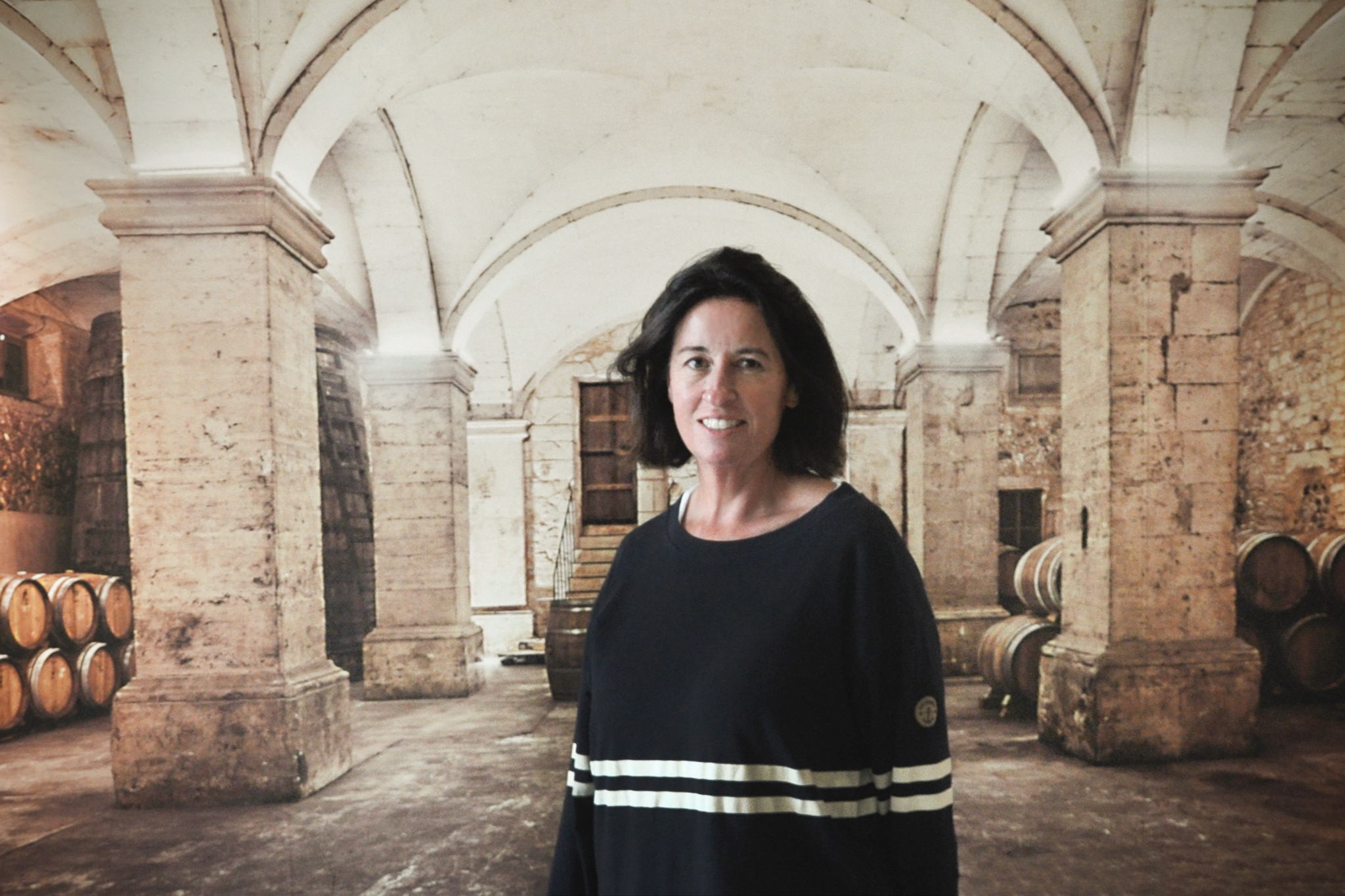
Pilar Oliver likes to say that wine is made not only from grapes, but from moments, memories and shared stories. At Bodegas Miquel Oliver in Petra, those stories stretch back to 1912, when her great-grandfather laid the first stone of the family winery. Four generations later — and with the fifth now stepping in — Pilar has become the bridge between that past and a very different future.
The first female oenologist from the Balearic Islands, she left Mallorca to train in Tarragona and France before returning home to steer the family business through profound change. Climate crisis, shifting tastes, and a drop in wine consumption are reshaping what ends up in the glass — and how people think about it. Speaking to Humans of Mallorca, Pilar talks about fighting to be taken seriously in a male-dominated field, learning to run a modern winery without losing its soul, and why defending wine as culture — not just “another alcoholic drink” — may be her most important battle of all.
Where were you born, and what were your early ambitions?
I was born in Mallorca 54 years ago. As a child I wanted to be a journalist. I loved the world of communication and was passionate about radio. Studying oenology was not in my original plans, but my father insisted. Looking back, I’m glad he did. Because once I started, I realised I was completely hooked — far more than I had imagined. It became my life.
So, I studied oenology at the Rovira i Virgili University in Tarragona, becoming the first female oenologist from the Balearic Islands. After that I went to France, where I completed a programme in International Wine Trade while working in wineries in Alsace, Champagne, and Jura. Later, once I joined the family winery, I continued my studies in Palma with Business Administration and Management. My aim was to gain as much knowledge as possible across the whole business, so that one day I could run the family winery.
Who are your parents?
My parents were real role models for me. They were ahead of their time — visionary, entrepreneurial — and they passed on values such as respect, honesty, generosity, seriousness, and humility. They were true lovers of their work and their family.
How did the winery begin?
The winery began its journey in 1912. My great-grandfather laid the first stone, and my father made the most changes. Today we are the fourth generation, and for a year now the fifth generation has also joined us.
Tell us about the business side of making wine.
The winery is not only a pleasure, a hobby, or a life project — it’s a business. It’s full of challenges, improvements to be made, risks, failures, and successes. But that’s also the beauty of it. No two days are alike, and that is wonderful.
What difficulties are you facing right now?
The biggest challenge is climate change and the drop in wine consumption.
With climate change, we work every day to adapt our vineyards: choosing varieties that respond best and trellising systems that tolerate the new conditions. Naturally, the wine being made today has changed too. The climate is different and so is the consumer. People are looking for fresher, lighter, more subtle wines. This is where the work of the oenologist comes in — ensuring that the wine reaching the market matches these expectations.
As for declining consumption, wine is being lumped in with “unhealthy things”, which I think is a huge mistake. They question whether drinking wine is good yet say nothing about all the sugary and highly stimulating drinks available to young people. Anything taken in excess is harmful. Starting from that premise, wine is good, and responsible consumption is even better. As a sector, we have a lot of work to do to avoid the demonisation of wine. Many of the great moments of our lives have been celebrated with a good wine. How can that be bad?
Wine is moments, memories, shared stories, places, conversations… this cannot be bad.
What market are you most focused on?
We work mainly with the Mallorcan market, but about 20% of our wine goes to export, mostly within Europe.
What does a typical day look like for you?
My day begins around 7:30am when I arrive at the winery and check emails. After that, no two days are the same. Depending on the season, I walk through the vineyards to see how work is progressing and talk with my colleagues about any problems and solutions. Then I continue with tasks in the winery: rackings, filtrations, bottlings, tastings… or visits for clients who want to discover the spirit of “Miquel Oliver”. In the afternoon I might return to administrative work or continue in the winery.
What was your first major challenge?
Finding a job as a female oenologist. Now it’s much more common, but 35 years ago it was very different. Women were usually sent to the laboratory or to commercial roles, but rarely to the winery itself.
In my first job I played a small trick: I put my last name, Oliver, before my first name, Pilar, on the contract, so they thought they were hiring a man. When I arrived, it was a real shock — they told me that as a woman I should go to the lab, not the winery. In the end I did go to the winery. The first months were difficult, but things changed. In my next job it was my own boss who told my future boss that yes, I was a woman, but I could do all the work of an oenologist perfectly well. Now I laugh — it was a challenge overcome.
What are you working on now?
I have many projects, but perhaps the most important is passing on to the fifth generation the motivation and enthusiasm that being at the head of the winery represents. My greatest satisfaction would be for them to live and feel it as I do — not as an obligation but as a pleasure. There will be difficult days, of course, but also very rewarding ones.
What are you most proud of?
Without a doubt, my greatest pride is that my father has been able to see the winery grow, consolidate, and improve. That is the greatest achievement of my professional life.
Do you like to travel?
I love travelling. My passport is always up to date and my suitcase ready in minutes. Discovering new places is one of my passions. Recently I visited Hungary — a real discovery. Travel opens your mind, refreshes your ideas, and makes you return eager to take on the world. I would love to visit Chile, Costa Rica, New Zealand, South Africa, China, Japan, Australia… my list has no end.
What do you think about the protests against mass tourism in Mallorca?
It’s true that in July and August, we don’t tend to get the best clients visiting the island. Many all-inclusive tourists don’t even leave the hotel. Good work has been done to reduce seasonality, and it shows, but there is still a lot to do. Mallorca needs a type of tourist who rents a car, eats in restaurants, visits wineries, and stays in hotels or holiday homes — someone curious and interested in discovering the authentic island. This sort of tourist comes in April, May, September, and October, but we need more of them and fewer of the former. This is the kind of tourism that would make Mallorca sustainable and interesting for Mallorcans.
How would you like to see Mallorca in 2040?
I would love to see an island full of people who live it, feel it as their own, are respectful and civic, and have cultural interests, motivations, and projects… in short, people who are, for want of a better word, more Mallorquin!






