
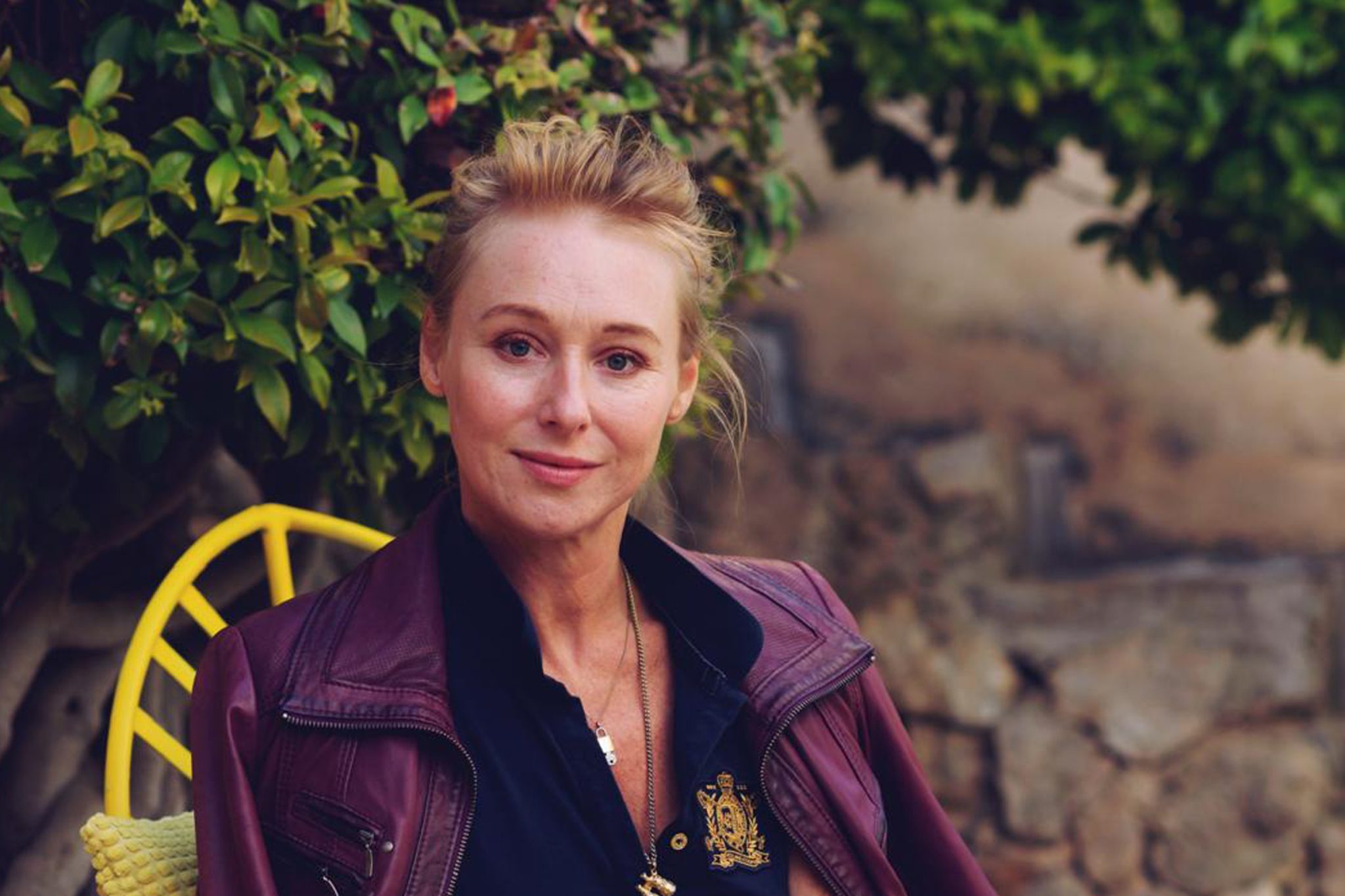
When you meet Emma Boardman, you sense it instantly — here’s a woman who’s lived a dozen lives and somehow woven them into one luminous philosophy. A former gymnast, pop performer, and creative producer turned modern-day philosopher, Emma now lives in Valldemossa, where she writes, creates, and holds space for women.
Her two main projects — The Sister Table and The Audacious Way — both began on the island. The Sister Table is a women’s community built around confidence in communication and self-expression. Through intimate dinners and brunches, women who fear public speaking can practise their voices in a safe, social, and judgment-free space. The Audacious Way, meanwhile, is Emma’s philosophy of “truth over timing, essence over effort, and presence over performance.” Born from her own process of reinvention in Mallorca, it’s a guide to living boldly and consciously — a way of coming home to yourself in a world that’s forgotten how to breathe.
As she puts it, “When there’s nothing left to prove, you finally start listening.”
Tell us a little about your early life — where you come from and what shaped you.
I was born in Poole, Dorset — a small seaside town in southern England, where beaches and countryside brushed up against a touch of glamour: Sunseeker yachts, elegant homes, beautiful lives that hinted at something more. My dad was a builder, my mum a nurse, so we lived close to privilege but far from it too. My mum would say, “That’s how they live,” not unkindly but as if to say: don’t get ahead of yourself. Even as a little girl, that made me furious.
My mum, for all her caution, also gave me deep roots. She homeschooled me for a year and taught me to read, write, and recognise every bird and tree. My dad, who lost his hearing from measles as a child, had learned early on how to stand his ground. “Just believe in yourself, kid,” he still says — the simplest and truest advice I’ve ever been given. He’s calm, content, and happy with a small life. I used to think that meant he lacked ambition. Now I see it as peace. They divorced when I was eleven, and I think that’s why I’ve spent my adult life creating spaces that feel safe and calm.
From a young age, I was drawn to movement and performance. I trained as a gymnast but dreamed in sequins, obsessed with Fame and Top of the Pops. Years later, I found myself dancing on that very show, part of a European pop group. Proof that the child in you always knows the map.
Where do you live now, and why do you love it?
Heaven — otherwise known as Valldemossa. After decades of hustling, pushing, and performing, I finally landed somewhere that feels like peace. Our home sits among olive trees, with mountain air that smells of orange blossom. I live here with my husband, Marcus — my true partner in both love and life. Mallorca gives me what I’d been searching for forever: stillness. It’s where my nervous system finally learned what calm feels like.
How did you find your way into the work you do now?
I didn’t plan any of it — I just followed what felt alive. At seventeen, my mum wanted me to be a PE teacher — “Good holidays,” she said. But I couldn’t imagine anything worse than spending my life in a classroom. I wanted movement, music, and freedom. So, while everyone else was filling out university forms, I was sneaking into auditions.
I landed a Bollywood movie while still at dance college — and that was it. My gymnastics gave me discipline. My imagination gave me style, and that combination carried me from backflips to backup dancer to pop star and tv presenter!
Performing didn’t just happen to me. It called me — and I said yes.
How did The Sister Table begin?
It started as a whisper: hold space for women. It emerged through chaos — a painful fallout in another women’s network that forced me to start again. I realised I wasn’t here to run someone else’s vision but to build my own. The Sister Table became that: a table of truth. A place where women can exhale, listen, and be fully seen. No performance. No competition. Just intelligent, audacious women daring to be real and support each other, together.
It’s grown into something quietly powerful — part salon, part soul revival. Every Sister Table begins the same way: I take a deep breath, centre myself, and whisper, “May every woman here remember who she really is.”
Tell us about The Audacious Way.
Since turning fifty, I’ve felt called to integrate everything I’ve ever been — gymnast, dancer, producer, founder, philosopher — into one coherent body of work. That became The Audacious Way.
It’s not a course or a company but a living philosophy — a way of returning to your own rhythm and living beautifully, without burnout or compromise. Around it, I’ve built an ecosystem: The Sister Table, The Audacious Dial, The House of Pursuit with Marcus, and Studio Boardman. Each is an expression of the same truth: that life can be both graceful and electric if you build it with intention.
Your journey hasn’t been without setbacks. How have challenges shaped you?
My life has been a series of renaissances. From gymnastics to pop to business, I’ve built and rebuilt myself many times. I’ve watched empires I created collapse — agencies, production houses, brands — but each ending stripped away what wasn’t real until only truth remained. Endings are portals in disguise
When my talent agency folded in the 2008 recession or my language business collapsed after COVID, I thought my story was over. It wasn’t… It was just changing genre. So I wrote. Every morning, without fail, I filled notebooks with memories, questions, and half-formed prayers. Those pages became The Audacious Way.
How did you realise you are deaf?
At middle school, a standard hearing test showed I didn’t hear as well as I should — but that was it, no follow-up, no concern. So I went through life as best I could, reading lips, reading expression, and reading energy. I think that’s where I developed my gift for reading people — words have always been optional for me; I can feel what someone means long before they say it.
Years later, I was live on TV filming a pilot for a major sports brand, wearing talkback in one ear and interviewing a well-known footballer with the other. I tried so hard to do a good job, but I couldn’t hear a thing in the studio — it felt like professional suicide. That moment sent me for a proper hearing test, which revealed I’d lost 75% of my hearing in both ears and would need hearing aids for life. I was 27, a TV performer, and that news broke something in me. The thought of showing up as ‘the deaf girl’ filled me with shame, so I retired overnight and reinvented myself in business instead.
It took me years to realise I hadn’t lost my voice at all — I’d simply been learning to listen in a different way.
What helped you through those moments?
Time, grace, and the right mirrors.
One of them was my friend Vaal — a curious stranger who became a cherished friend. She saw my differences as invitations, not threats, and asked the question that changed everything: “You’re a dancer. Why did you stop moving?” That question woke something in me.
What did you take away from all this?
That if you feel there’s something more for you — there probably is.
Every so-called failure was really redirection. The child in me always knew the way; the adult just had to catch up. Now I build with foundations, not fireworks.
What are you most proud of?
That I’ve learned to live gently without feeling lazy.
After a lifetime of striving and performing, I’ve made peace with rest. I used to think stillness meant falling behind — now I see it as the power source. Slowing down isn’t giving up; it’s tuning in.
What makes Mallorca so special to you?
Mallorca is medicine.
After years in London’s noise and speed, the island feels like an exhale — fifty shades of green, mountain air, and a community of brave, creative people who’ve chosen to live life differently.
It’s cosmopolitan and soulful all at once. I drift between its cliques and circles, weaving them together through The Sister Table. Here, I’ve met the most fascinating people of my life — the ones who refuse to live by default. Mallorca doesn’t demand anything from you. She just holds you until you remember who you are.






