

When British artist Octavia Campbell-Davys arrived in Mallorca, she planned to stay for just three months. Seven years later, she’s still here — with her sketchbooks, her surfboard, and a deep gratitude for the island that’s become her home and her sanctuary. In this candid conversation with ‘Humans of Mallorca’, Octavia shares how her creative career unfolded, how Mallorca carried her through a life-changing health crisis, and what she hopes the island’s future will hold.
Let’s start at the beginning — where you grew up, your family, and what shaped you.
I was born in London and studied at Cambridge University. My father, Richard Campbell-Davys, lives in Budapest with his wife and my Hungarian step-brothers. My mother, Charlotte Lampard, was a curator and now lives in Devon. My father pushed for education, which I’m grateful for, and also introduced me to music. My mother gave me an interest in art and food. Neither of them is conventional, which has definitely influenced me. As a child, I actually wanted to be a vet, not an artist! But art was always there, even when I was studying science.
What brought you to Mallorca — and why did you stay?
I’ve lived in many countries, and when I came to Mallorca, I only planned to stay for three months. But seven years later, I’m still here. There was just no reason to leave. It’s safe, beautiful, and still hasn’t exhausted my insatiable need to explore. I’m constantly finding new places that have always been here, and new concepts, shops, restaurants, and creative projects are constantly springing up. You have to dig a little to find them but they are there. I run the What’s On Mallorca Facebook and Instagram page, plus Things to Do in Mallorca, where I try to share some of the incredible things going on. I also feel that the island has saved me in terms of my health and inspired my art.
How did you become an artist?
I’ve always had art in my life. My father focused on the sciences for me, but I was allowed to keep art as a hobby. At school, I studied Art alongside Maths, Further Maths, Chemistry, and Biology. At Cambridge, I went to life drawing and History of Art classes alongside my main degree. Art was always a side hustle — I did commissions of dogs, horses, and even houses. When I moved to Mallorca, I continued painting alongside my remote job. But when I got sick and had to stop working, art became my full-time focus.
What have been the biggest challenges — and proudest moments — in your artistic career?
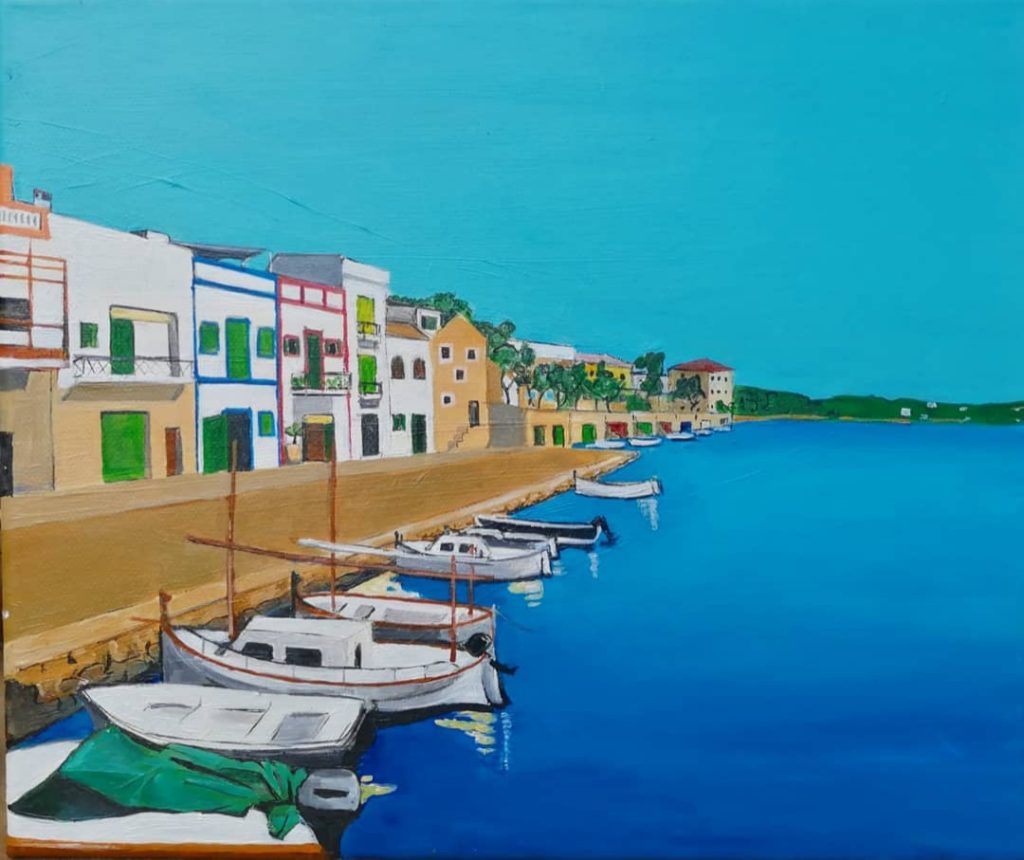
Every time I complete a commission and the client loves it, I feel a huge sense of gratitude and success. When IB3 and Última Hora wanted to interview me, that felt enormous too — especially as an immigrant painting Mallorcan scenes. That interest felt like a kind of acceptance, which meant a lot. But art is hard because you put so much of yourself on the canvas. Criticism can feel personal, even when it isn’t meant that way. Commissions can be especially tricky because the client’s vision doesn’t always match your own. Finding that balance — staying true to your style while delivering what they want — is always a challenge.
What is the most interesting thing about your job?
Now that I’m a full-time artist, I love seeing what other people are up to on the island. There’s such a creative hub here, and I do think that most artists on the island really champion other artists. Some examples of this are Dolli Taylor from Trobat and The Beehive.
What’s a typical day like for you?
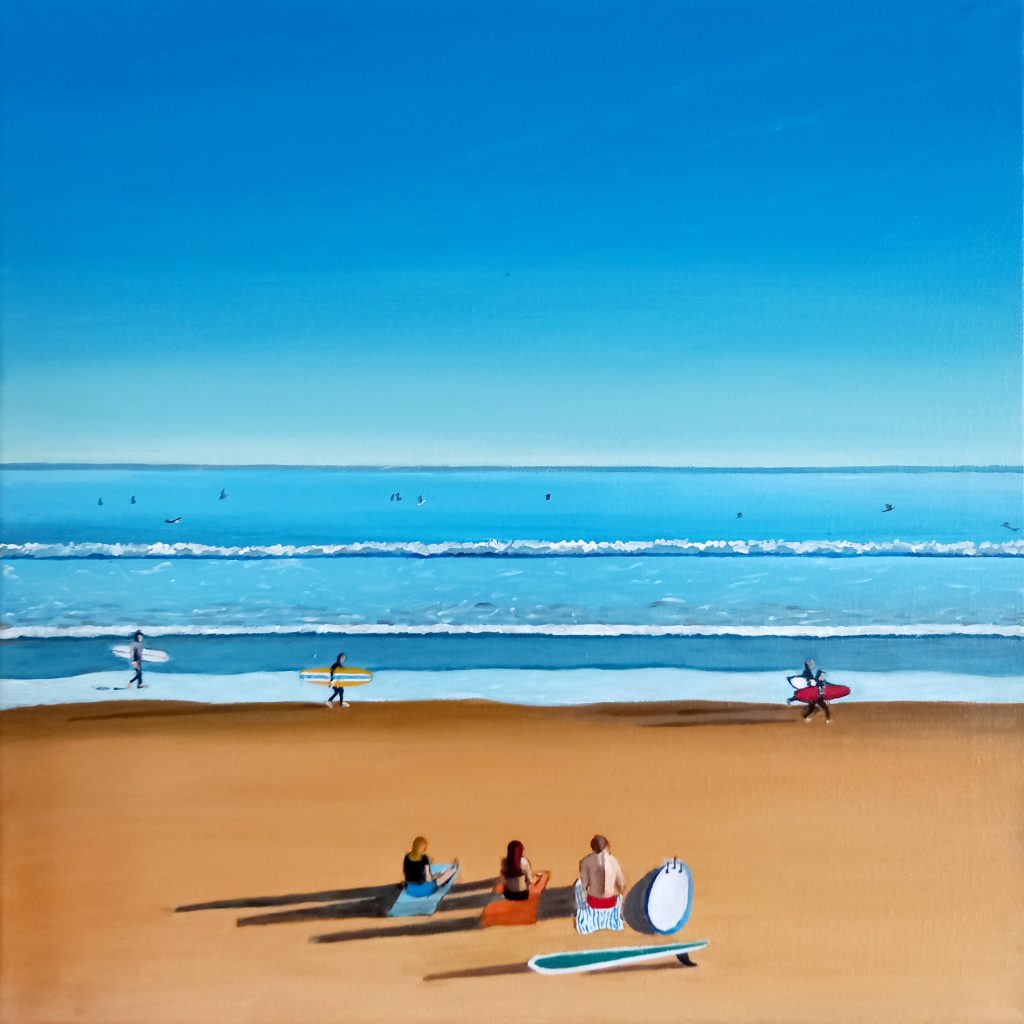
I’m an early bird, so I start the day with tea in bed, journaling, and reading. Then I’ll do some stretching and meditation (I use Sam Harris’ Waking Up app). Mornings are my best creative time, so I usually paint early, listening to an audiobook or music. Depending on the day, I might go riding at Can Cavall Blau near Sencelles, or if there are waves in Cala Major, I’ll take my surfboard. I try to swim most days to help my circulation, which was affected by chemo and medication.
Some days are for hospital tests, others for hiking, exploring, or trying new restaurants. My partner, Johan, is a chef at Hotel Feliz, so we usually have lunch together. Afternoons are back in the studio. If I get creatively stuck, I play piano, which often sparks something. Evenings are quiet, and I love films and series, so I work through my watchlist before falling asleep early. I don’t go out much at the moment, but I’d love to start getting into more things as my energy increases.
You’ve been open about your health journey — can you share what happened?
At the end of 2023, I was diagnosed with Acute Myeloid Leukemia. I was feeling a little under the weather and had some swelling in my glands and some mouth ulcers. I went to one doctor who said it was simply this time of year. My partner pushed me to go to another doctor and, fortunately, she sent me to have blood tests and I was found to have 80 percent cancerous bone marrow. This was a huge shock as I live healthily and there was no genetic component.
How did you get through it — who supported you?
The Haematology team at Son Espases, especially Dr. Novo, my incredible partner Johan, and my family and friends. Johan and I had only been together for ten months when I got sick, but he got me through the 250 days I spent in isolation in hospital. His life completely turned upside down but he was so strong, supportive, and loving. He kept me laughing too every day. I’ve never met anyone as good as him.
What has the experience taught you?
Gratitude. Many people with this disease don’t survive. After six months of treatment, the cancer came back immediately, so I had a stem cell transplant using my brother’s cells. I feel good right now, but I know how close I came to not being here. That’s given me a sense of urgency — I want to say what I need to say through my art, now — not someday.
What are you most proud of?
My relationship with Johan. He literally carried me through everything.
How do you feel about the protests against mass tourism?
I completely understand them. I wish there were better services for Mallorquins — healthcare, housing, and fair wages. I saw how bad things got in Ibiza, where service workers were sleeping in their cars because they couldn’t afford rent. And I feel so sorry for nurses at Son Espases, working incredibly hard on low salaries, while watching people fly in on private jets. I don’t think campaigning against campervans is helpful, though. Personally, I was lucky to have Johan — when I had to stop working, my income wouldn’t have even covered my share of the mortgage. I don’t know how families dealing with cancer manage.
What are your plans for this year?
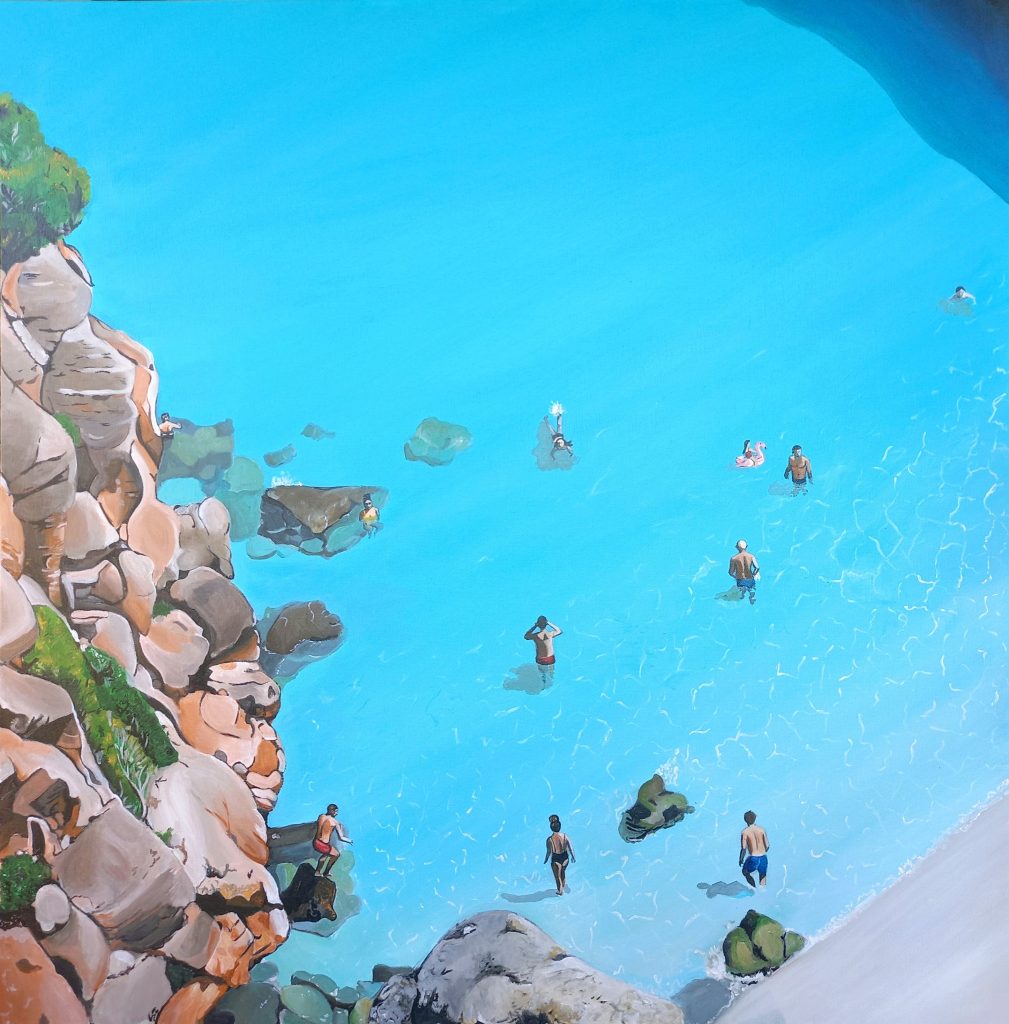
To stay well, paint as much as I can, and enjoy everything I couldn’t when I was in hospital — swimming in clear water, riding, painting, hiking, and eating amazing food.
And what do you think Mallorca will be like in 2030?
I think mass tourism will decline and travel will become more expensive. But we need to make sure we support the bar workers, nurses, and cleaners — the people who keep the island running. AI will also have a big impact on the arts. The world is shifting fast, but no matter what, I wouldn’t want to be anywhere else.
Do you have an extraordinary story to share? Whether you’re making waves in sports, music, art, business, or another field, we want to hear from you! Become a Human of Mallorca and let us share your journey with the world. Get in touch with us at: hola@humansofmallorca.com






