If you’re after a Christmas with a difference, Mallorca might just be the place for you. Our sun-kissed Island takes the festive season seriously, mixing Spanish, Catalan, and its own local village twists into the celebrations. The incomers from everywhere else add their own traditions too, which means a Christmas emerges which is all things to all people.
Christmas gets going in Mallorca towards the end of November, around Thanksgiving, if you are from the USA. Palma, the capitol city flicks the switch on its sparkling Christmas lights. All around the island, towns and villages join in with their own Christmas lights switch on. Some villages light up in November but more around the time of the December Bank Holidays of the 6th & 8th December.
You shouldn’t miss the Christmas markets, or “mercadillos de Navidad” as they’re known locally. Head to Palma’s Plaça Major or any main square and you’ll find stalls brimming with handmade crafts, decorations, and local treats. It’s the perfect spot to pick up quirky nativity figures, wooden toys, or sample some sweet turrón and marzipan. New for this year is the German Christmas Market, in the park alongside the Cathedral.
Nativity scenes, called “Belénes”, are a very important tradition. You’ll spot them everywhere, from entradas in village homes to fine churches, shops and public buildings. Locals love to add their own flair, incorporating new characters every Christmas.
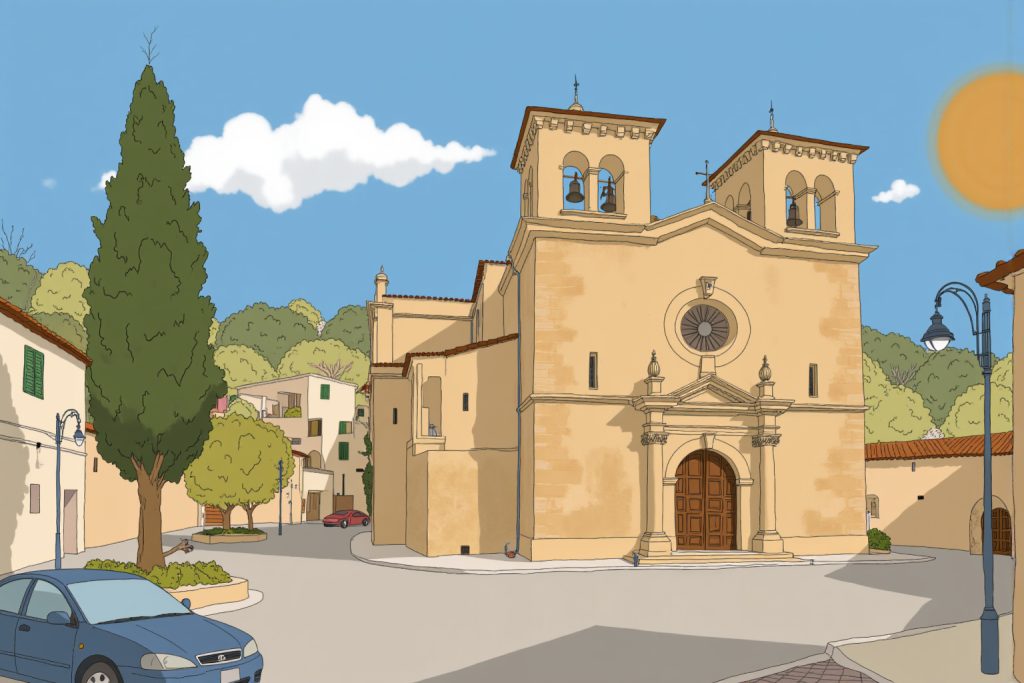
On Christmas Eve, or “Nochebuena”, families gather for a family dinner featuring local favourites. Later, many head out for “Misa del Gallo” (the Rooster’s Mass) at midnight—a tradition named after the legend that a rooster crowed on the night Jesus was born. In Palma’s Cathedral, and many village churches you’ll be treated to the haunting “Sibil·la” chant. As the family dinner passes and the church attendance is done, then It’s time to party. The music in the squares of Palma, and in most village centres, keeps the party rocking all night.
Food is at the heart of Mallorcan Christmas. Tables groan with Sopa de Nadal (a warming Christmas pasta soup), roast lamb, fish and savoury pastries known as “coques”. Sweet-toothed friends are in luck too, with ensaïmada (a fluffy, spiral pastry) stuffed with custard, cream, or angels’ hair. Crumbly polvorones, and plenty of turrón complete the feast. It’s all about gathering round the table, welcoming everyone home for the season, and having fun.
Christmas isn’t quite over after the 25th. For many, the main event is “El Día de los Reyes” (Three Kings’ Day) on 6th January. The night before, the Three Kings arrive in style, often by boat, they parade through the towns, tossing sweets to the children. Come morning, children wake up to find gifts from the Kings, delivered to their houses by Kings on Camels. Families celebrate by sharing a “Roscón de Reyes”, a pretty ring-shaped cake topped with colourful fruit. The 6th of January is ‘Christmas Day’ for local people. Incomers who observe 25th December as their tradition are always happy to have two celebrations.
Christmas in Mallorca is about warmth, togetherness, and a good dose of local charm. Whether you’re admiring the nativity scenes, tucking into festive treats, or joining a lively parade, you’ll find the island’s festive spirit contagious.
In the middle of the ‘two Christmas Days’ you will have celebrated New Year too. You will feel ‘partied out’ and need recovery time before beginning the amazing celebrations of St Sebastian, the patron saint of Palma from 20th January. The live music street parties and barbecues are legendary.
From late November to late January, you are never far from an important celebration in Mallorca. Always a great end to the old year and a fabulous welcome to the new.