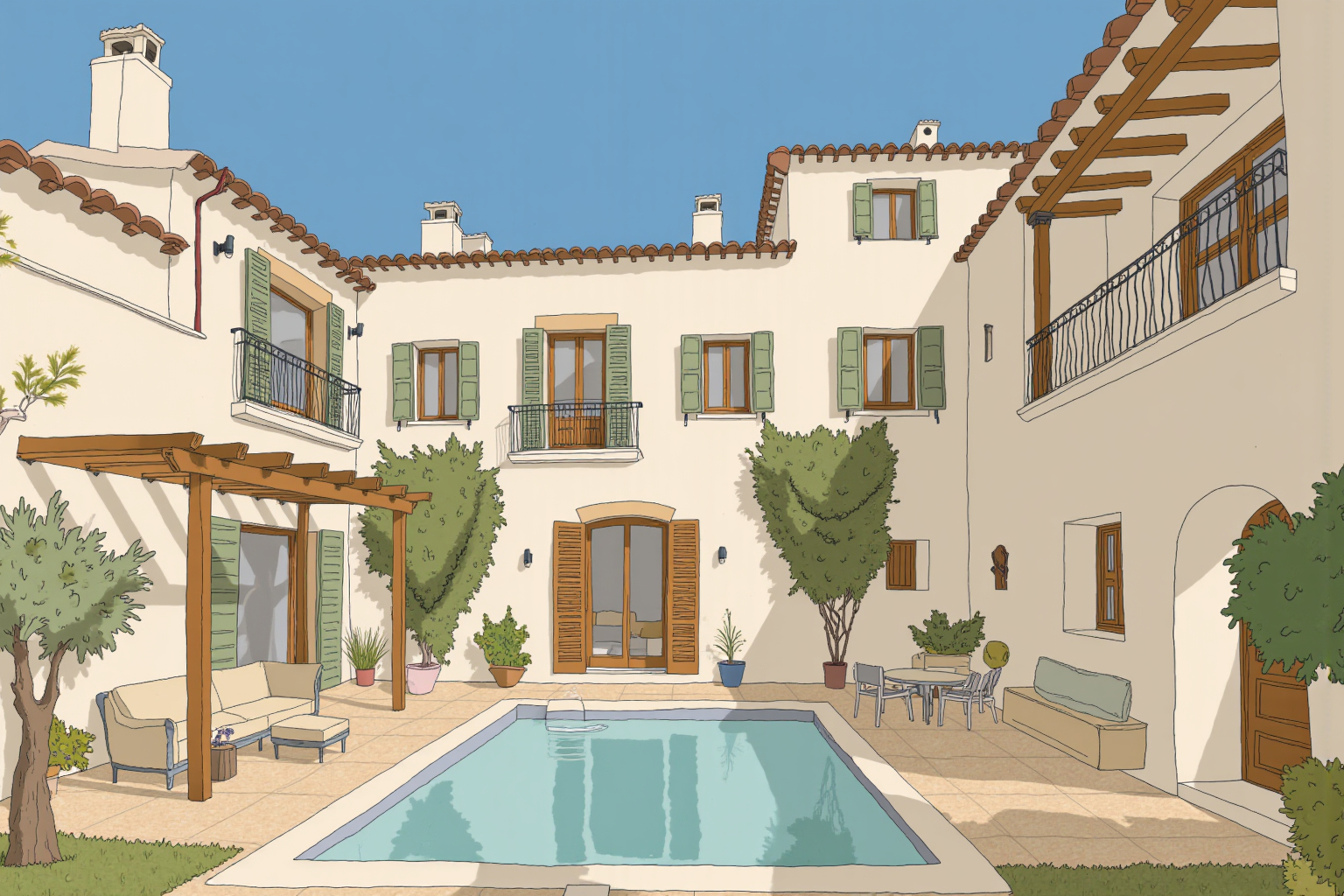
Anyone searching for a mallorca townhouse for sale is usually after something specific: a village house or terraced home with character, sitting in a location that actually works day to day. This corner of the Mediterranean has become one of the strongest markets for exactly that. A mallorca townhouse for sale typically bundles together the things buyers chase hardest – the ability to walk everywhere, restaurants and shops on the doorstep, and a patio, terrace or private pool of your own.
Against apartments, a townhouse gives you more independence and cleaner use of interior space. Against a sprawling villa, it costs less to get into and puts you somewhere genuinely practical. Well-renovated village houses in consolidated streets stay scarce, which underpins their value.
Living in a Townhouse Mallorca: Village Life Without Compromise
Exploring Mallorca Townhouse for Sale Options
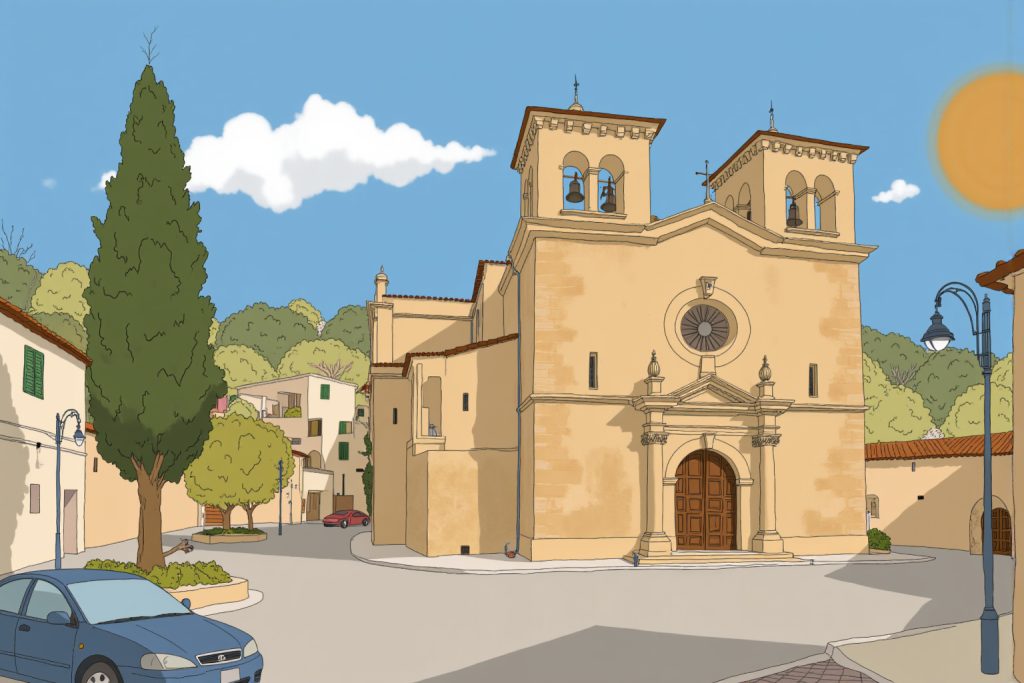
Choosing a townhouse mallorca lifestyle means shopping at the weekly market, wandering down to the main square, and having a café five minutes from your front door. The pace slows down without costing you design, technology or comfort. In a properly renovated village house, the patio ends up as the centre of everything – breakfast outside, dinners with friends, a shaded corner to switch off, sometimes a plunge pool for July and August.
Layouts tend to be flexible. Open-plan ground floors spill straight onto the patio or garden, bedrooms sit upstairs, and many houses top out with a roof terrace looking over the old town or the Serra de Tramuntana. Remote workers, families and people splitting their year between the island and elsewhere get year-round living with quick runs to the airport, Palma and the coast – plus an identity the big resorts simply don’t have.
The Most Attractive Locations to Buy Property in Mallorca
Where you buy matters more than almost anything else. If you plan to buy property in mallorca as a townhouse, these are the towns and neighbourhoods that consistently draw serious interest.
Palma: Old Town, La Calatrava, La Lonja and Santa Catalina
Palma’s Old Town suits anyone wanting an urban house with real history behind it. In La Calatrava, Sa Gerreria, La Lonja and Puig de Sant Pere, you’ll find terraced and village properties refurbished around interior patios, marès-stone vaults and exposed beams, paired with designer kitchens and efficient climate control.
Santa Catalina brings a looser, food-driven atmosphere. Old fishermen’s houses here have turned into contemporary homes with terraces, and daily life runs on foot – the market, the Paseo Marítimo, the restaurants everyone talks about, plus fast links to the airport.
Portixol and Molinar
Portixol and Molinar rank among the most wanted addresses on Palma Bay. Former fishermen’s cottages metres from the water now come as design-led homes with light-filled patios, garages and terraces catching partial sea views. You live on foot or by bike: promenade, cafés, small coves. Stock is thin, and the good ones rarely surface publicly.
Sóller and Port de Sóller
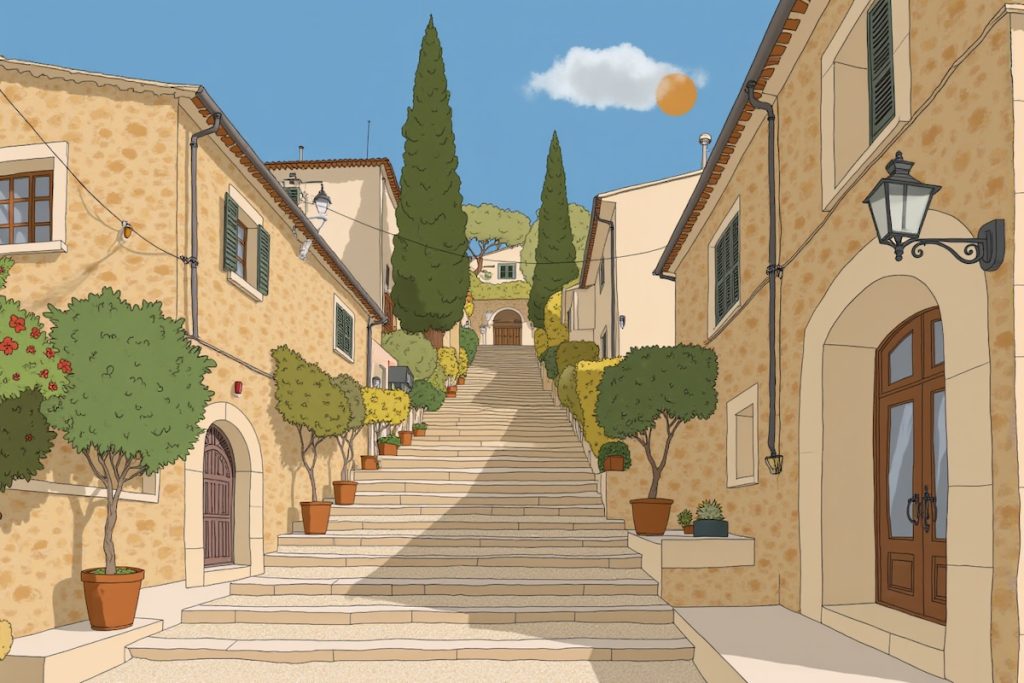
Sóller pairs manor-style architecture with the mountain backdrop of the Tramuntana. Its stone village houses – tall doors, deep patios – appeal to buyers who want character and quiet without losing schools, shops and year-round life. Many keep their modernist bones while adding modern comfort and occasionally a garden pool. Port de Sóller adds the seaside layer, with beach access and the historic train running down to Palma.
Pollença and Puerto Pollensa
Pollença sits among the island’s most prestigious towns – cobbled streets, café-lined squares, the Calvario steps, a busy cultural calendar that pulls an international crowd all year. High-end houses with patio and pool are genuinely rare, especially ones with a garage on a quiet but central street. Puerto Pollensa nearby offers family beaches and a marina. The pairing works well for buyers wanting a village house close to schools with strong premium rental potential.
Alcudia and Alcudia Old Town
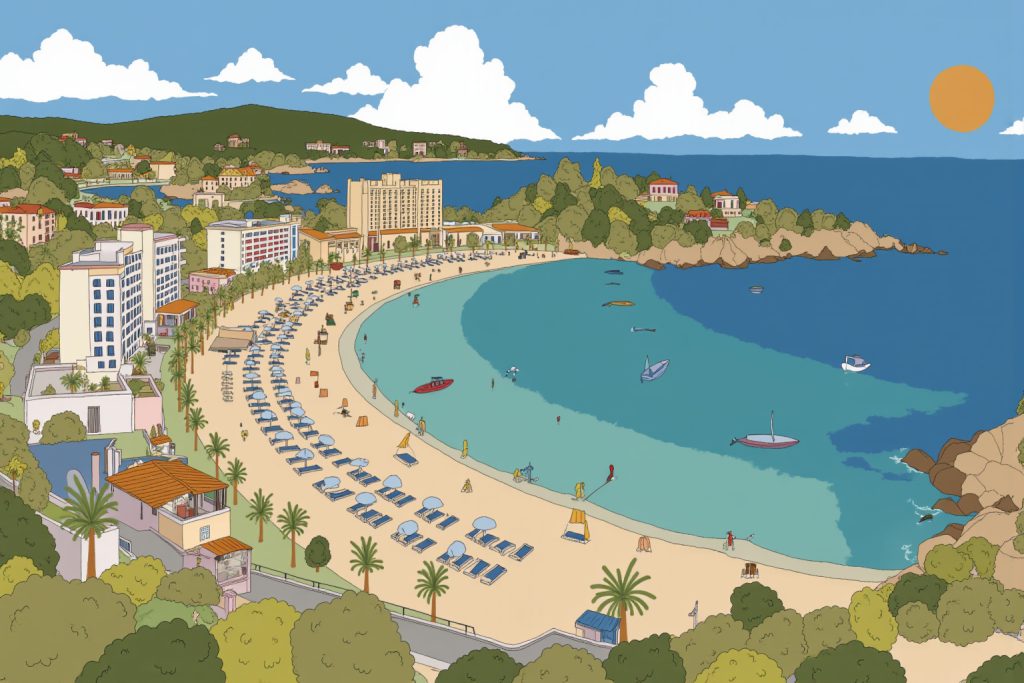
The walled Old Town of Alcudia is one of the best-preserved historic centres on the island. Pedestrian streets, atmospheric squares, local shops, a lively calendar. Refurbished houses here respect the stone façades while slipping in patios with pools, microcement floors and open kitchens. With Puerto Alcudia and the long beach close by, these homes work for families wanting village life plus holiday appeal, and they hold steady demand as investments.
Santanyí and Surroundings
Santanyí has become one of the southeast’s most desirable villages. Its golden-stone centre is full of village houses reworked into design homes with landscaped patios, pools and built-in studios. The weekly market, galleries and food scene draw an international audience after houses with soul. Proximity to Cala Santanyí, Cala Figuera and Cala Llombards adds pull, and well-placed central townhouses perform strongly on the premium rental market.
Artà
Artà, in the northeast, has grown from a quiet town into a magnet for buyers chasing authenticity and landscape with year-round life. Stone houses with big patios and roof terraces suit personal projects – studios, workshops, remote-work spaces. The centre keeps its shops, restaurants and market without feeling swamped by tourism. Close to natural parks, trails and the unspoilt Llevant coves, it usually offers more square metres per euro than other parts of the island.
Selva
Selva sits at the foot of the Tramuntana and balances authentic village life with open mountain views. Houses here often feature deep patios, roof terraces and sometimes orchards or small gardens. Cyclists and hikers favour it for year-round rural living with solid links to Inca, Palma and the north coast. The mood is calm and residential; tastefully renovated homes that keep original features while adding comfort draw European buyers wanting discretion.
Orient
Orient is one of the island’s most singular spots – a small valley wrapped in mountains and forest, with a handful of village houses carrying heavy rural character. Living here means total disconnection: silence, clean air, hiking routes, high-mountain scenery a short drive from Bunyola, Alaró or the Sóller road. Supply is tiny. When anything comes up, renovated or not, it draws immediate interest. A hidden-retreat second home with well-protected value.
Santa Maria, Binissalem and Alaró
These three form a strong interior triangle. Santa Maria del Camí runs dynamic and close to Palma, with cafés, shops and an established market. Binissalem means wine and village houses with grand entranceways and deep patios built for design projects. Alaró, at the foot of the mountains, draws an international community with its schools and renovated houses with patio and pool. All three deliver authentic life, cycling and hiking, and fast airport access with steady demand.
Andratx and S’Arracó
Andratx and nearby S’Arracó suit buyers wanting proximity to Puerto Andratx without frontline prices. Traditional houses with patios, mountain views and original Mallorcan features can become charming homes minutes from southwest coves and golf. S’Arracó keeps the feel of a well-preserved small village with a settled international community. Both combine authenticity, sea access and appreciation potential for personal use or selective rentals.
Types of Townhouses for Sale in Mallorca
Keywords: townhouses for sale in mallorca
Not all townhouses for sale in mallorca are the same, and the category you choose shapes both lifestyle and return.
Design townhouses, fully renovated. Village houses reworked by architects and designers – high-quality finishes, efficient climate control, new carpentry, optimised layouts. Usually landscaped patios, a plunge pool, often a garage. The most sought-after segment for buyers wanting turn-key homes with contemporary interiors inside a traditional shell.
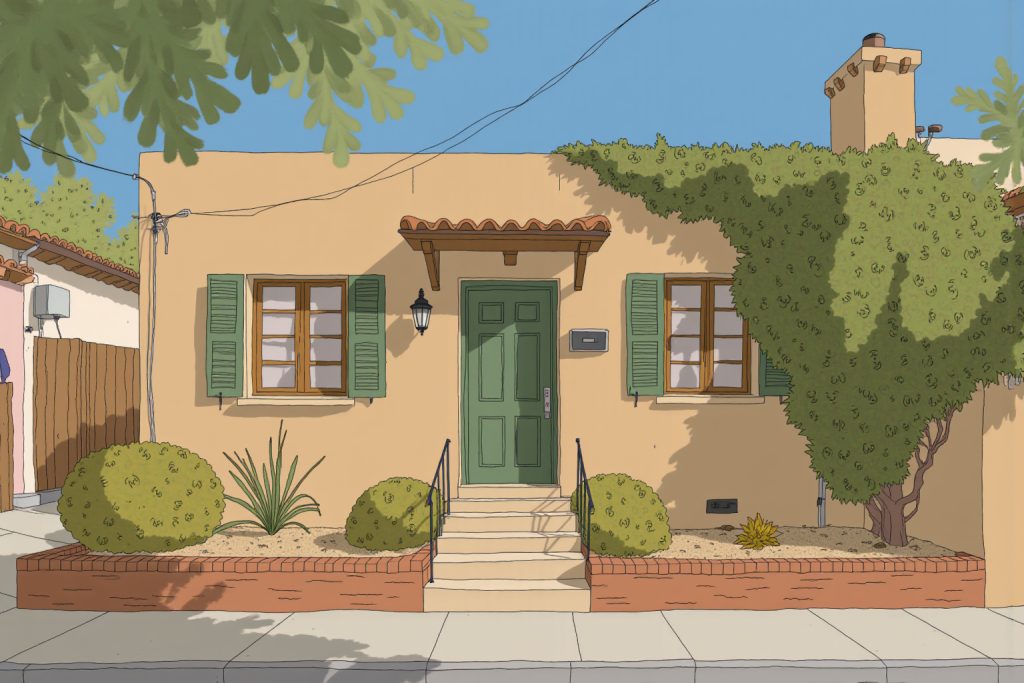
Village houses with patio and pool. The most coveted in historic centres. A well-oriented patio with pool, an outdoor dining area and greenery changes everything – for personal use and for rentals. These spaces read like a small Mediterranean riad, indoor and outdoor blurring together, and they suit long stays and remote work.
Townhouses to renovate in consolidated streets. Good structure, excellent location, full refurbishment needed. The best route for a tailor-made project and potential capital gains. In high-demand villages, supply of houses to renovate on the best streets has dropped sharply, which strengthens their upside when location and build quality are both right.
Modern townhouses in complexes with pool. In Palma’s residential fringes and several coastal towns, modern houses in communities with shared pools, gardens and sometimes security trade historic character for practicality. Garages, two or three storeys, terraces, easy access to schools – a fit for families wanting low-maintenance contemporary living.
Price Guide for Mallorca Townhouses for Sale
Pricing for mallorca townhouses for sale moves with town, street, size, patio and level of refurbishment. Village houses to renovate in high-demand locations start from around €400,000, depending on size and location. Ranges shift with the exact street, square metres and the standard of any work already done. The figures below give a working sense of the market, and the FAQ breaks them down further.
Benefits of Buying a Townhouse in Mallorca
Among the houses for sale in mallorca spain market, townhouses stand out for value protection. They sit in consolidated urban fabric with limited supply and both domestic and international demand. Unlike new developments on peripheral land, houses in historic centres and established villages benefit from planning rules that cap new construction and hold onto neighbourhood character.
Village houses also allow year-round use and hold strong appeal for quality rentals – regulated holiday lets or mid-to-long-term stays, depending on the municipality. For plenty of European families, a Mallorcan townhouse becomes a practical base for remote work, schooling and an authentic Mediterranean life with markets, cafés and nature nearby.
Reasons to Live In, Invest In or Let a Property for Sale in Mallorca
The appeal of this type of property for sale in mallorca comes down to a stack of factors that define modern residential luxury: authenticity, walkability, private outdoor space, well-designed interiors and quick connections across the island. Living in Pollença, Sóller, Santanyí, Artà, Selva or Santa Maria means markets, cafés and cultural life, with beaches, marinas and mountain routes minutes away.
On the investment side, well-located and well-renovated townhouses behave as stable assets in Mallorca’s prime market. Scarcity, location appeal and the option of mixing personal use with premium rentals create a rare balance of enjoyment and yield. Getting the town, street, refurbishment scope and setting right is the whole game.
For buyers diversifying their Mallorcan holdings without stepping into the large-villa segment, a townhouse in Palma Old Town, Portixol, Pollença, Alcudia, Santanyí, Artà, Selva or Orient is a smart strategic move.
What Drives the Value of a Townhouse
Three fundamentals sit underneath value for any townhouse mallorca purchase: micro-location, orientation and legal clarity.
Micro-location. The exact street, noise, traffic, nearby shops, walkability to the main square, schools and services – all without giving up privacy.
Orientation. South or southwest orientation pulls maximum winter sun into patios and terraces, which matters in deep townhouses. Buyers also value patios shielded from overlooking neighbours, open views to church towers, mountains or countryside, and a garage.
Legal clarity. Verified boundaries and square metres, current licences, occupancy certificate, EPC, and full alignment between the property, land registry and cadastre. Houses with strong fundamentals protect your exit and future liquidity.
Rental Potential and Licences
Rental potential across townhouses for sale in mallorca shifts by municipality, street and property type. In many historic centres, holiday rentals face strict regulation and tourist licences may be limited or unavailable. Elsewhere, only long-term or seasonal lets are allowed – a solid market of families, remote workers and winter residents.
Every case needs its own analysis: whether the property already holds an ETV licence, whether one could realistically be obtained, or whether a mid-to-long-term strategy fits better. Demand study in each village – Palma, Pollença, Sóller, Santanyí, Artà, Selva and others – lets you estimate occupancy, achievable rates and operating costs, so any purchase decision weighs yield, risk and personal use together.
Starting Your Search for a Townhouse
Whether the picture in your head is a design house in Palma’s Old Town, a reformed fisherman’s cottage in Portixol-Molinar, a village house with patio and pool in Pollença or Sóller, or a mountain hideaway in Selva, Artà or Orient, the search for mallorca townhouses for sale rewards patience and local knowledge. The best process moves through a shortlist, technical analysis, offer, negotiation and completion at the notary – with every stage grounded in verifiable data, not just the emotion of a beautiful room. Requesting private in-person or virtual viewings early helps narrow the field to houses that match how you actually want to live on the island.
People Also Ask About Buying Property in Mallorca
Can a foreigner buy a house in Mallorca?
Yes. Foreigners buy freely in Mallorca, with no restrictions for EU or non-EU citizens and no residency requirement. You will need a Spanish tax ID number (NIE), applied for at a Spanish consulate or on the island. A Spanish bank account isn’t strictly mandatory but makes mortgage processing and tax payments far smoother. Non-residents can usually secure mortgages covering 60% to 70% of a property’s value. Budget an extra 10% to 15% on top of the price for taxes and fees – property transfer tax (ITP) on resale runs roughly 8% to 11%, VAT sits at 10% on new builds, and notary and registry fees add around 1% to 2.5%. Hiring an independent local lawyer is strongly advised.
Can you buy a property in Spain for $100,000?
Yes, though it reshapes your expectations. Around $100,000 (roughly €93,000) buys studios, small apartments or older village homes in inland or rural regions – think Almería, Murcia, Lugo or Zaragoza – rather than glossy central properties. Coastal towns and major cities like Barcelona, Madrid or Málaga rarely offer anything at this level unless it’s tiny or needs total renovation. Expect small one-bed flats, traditional village townhouses or off-market fixer-uppers. Purchase taxes and fees add roughly 10% to 15%: transfer tax (ITP) around 6% to 10% on resale, notary and registry fees near 1% to 2.5%, and legal fees around 1% to 2%. Mallorca itself sits well above this budget.
Is Mallorca expensive to buy property?
Yes – among the most expensive in Spain. Price per square metre runs from €4,000 to €11,000, with Palma the country’s priciest city to buy in. The average Balearic home now costs roughly €402,140, with island prices averaging around €5,000/m². In prime spots like Port d’Andratx, Son Vida and central Palma, figures top €9,000/m², and villas frequently sit between €2.5 million and €5.5 million. More affordable options exist inland – Sant Joan, Sa Pobla, Felanitx, Inca. High foreign demand, mainly German and British, plus geographic scarcity and strict environmental protection laws limiting new construction, keep prices high. Budget an extra 12% to 17% for taxes and fees.
Is there a responsible way to buy residential property in Spain as a foreigner?
The consensus from people living in Spain is straightforward: buy to actually live in the home, not to speculate or run an Airbnb. That single choice does the most to avoid worsening local housing pressure. If you’re also bringing jobs and paying tax locally, you’re contributing on multiple fronts. Practical steps that reduce impact include buying away from the trendiest coastal hotspots, renovating a derelict or long-unsold property rather than outbidding locals for scarce stock, and letting long-term at fair rents rather than short-term holiday lets. One individual buying one home to live in has negligible effect – the structural problems come from investment funds and mass short-let conversions.
Is there a 100% tax on foreigners buying property in Spain?
The widely reported “100% tax” was a government proposal, not enacted law, and it was frequently misreported. The plan targeted non-EU, non-resident buyers – people spending under 183 days a year in Spain – and several read it as a 100% increase in existing tax (for example, 10% rising to 20%) rather than a flat 100% levy. It would still need regional implementation to take effect, and it wouldn’t apply to those who genuinely reside in Spain full time. Anyone planning to live on the island rather than hold a vacant second home would likely fall outside its scope. Renting first while you establish residency is a common workaround discussed among buyers.
Frequently Asked Questions
Which are the best areas to buy a townhouse or village house in Mallorca?
For high-end houses, Palma Old Town – La Calatrava, Sa Gerreria, La Lonja, Santa Catalina – offers historic character and urban living. Portixol-Molinar delivers reformed fishermen’s houses by the sea, scarce and in demand. In the north, Pollença and Alcudia Old Town combine squares, markets and proximity to Puerto Pollensa and Puerto Alcudia. In the Tramuntana, Sóller, Fornalutx and Orient suit mountain lovers. Inland, Santa Maria, Binissalem, Alaró, Selva and Artà offer generous houses, deep patios and community life. Prioritise micro-location: quiet street, south or southwest orientation, usable patio, easy parking, discreet access to services and nature. All of it matters for enjoyment and resale.
How much do townhouses in Mallorca cost, and what determines the price?
Prices track town, street, size, patio and refurbishment level. In Palma Old Town – La Calatrava, La Lonja, Santa Catalina – refurbished townhouses typically run €800,000 to €3,000,000. In Portixol-Molinar, renovated fishermen’s houses with patio and garage often sit between €1.2 and €3.5 million. In sought-after villages like Pollença, Sóller, Santanyí or Artà, design village houses run €900,000 to €2.5 million, while Selva, Santa Maria, Alaró and Binissalem offer quality homes from around €600,000. Key drivers include orientation and light, patio size and privacy, presence of a pool or garage, views, façade width, refurbishment standard, energy efficiency, street noise, access, and above all the property’s legal and planning integrity.