It’s as if Goya has gone to Mardi Gras by way of the Moulin Rouge
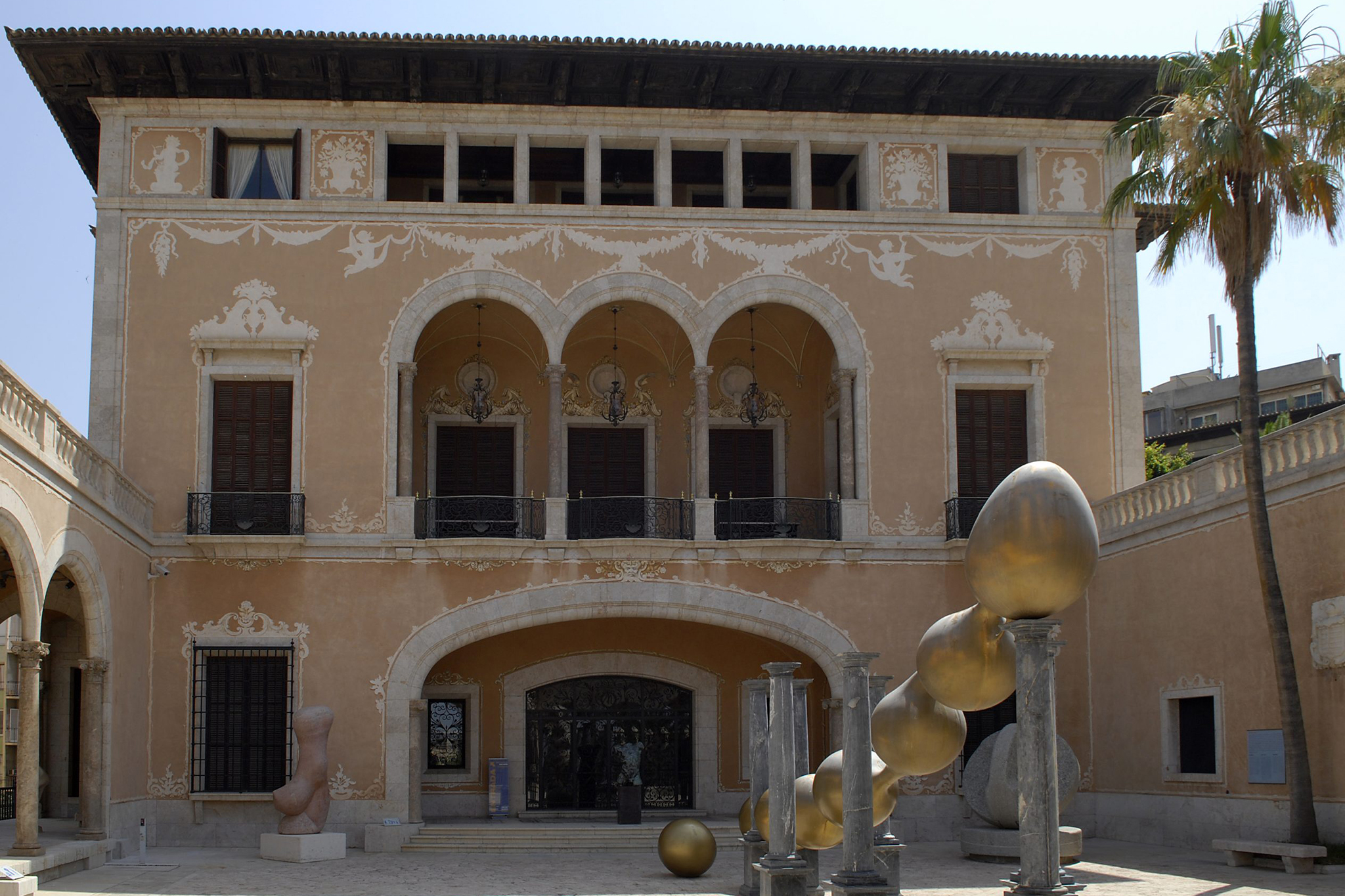
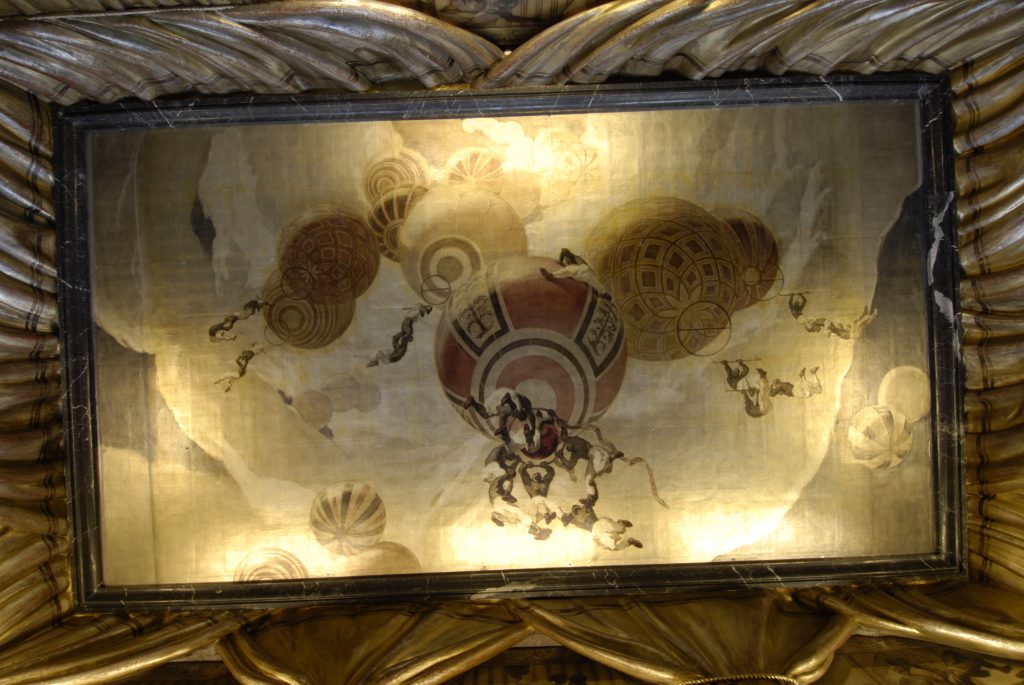
When Spain’s richest man decided to decorate his Palma palace, he wanted nothing less than spectacle. And spectacle is exactly what arist José María Sert delivered. Step into the music room of Joan March’s Renaissance-style mansion beside Palma’s Almudaina Palace and you are swept upward into a dizzy world of acrobats, trapezes, and hot-air balloons.
The ceiling bursts open into a vast, sunlit sky where wildly foreshortened performers soar upward in exuberant abandon. Painted curtains — so convincing that visitors often reach out to touch them — are drawn theatrically above each window and door, transforming every opening into a miniature stage. Acrobats leap through hoops, bands strike up, circus performers clamber up steps, and wave from balconies. It is as if Goya has gone to Mardi Gras by way of the Moulin Rouge.
Such extravagance did not come cheaply. But Joan March — Spain’s wealthiest man and among the richest in the world — could easily afford the greatest muralist of his era. In 1939, as he built his monumental Palma residence, he paid Sert one million pesetas up front in a suitcase of cash, with another half-million promised on delivery. Sert was commissioned to decorate both the grand staircase and this extraordinary music room, which would become the last great private work of his life.
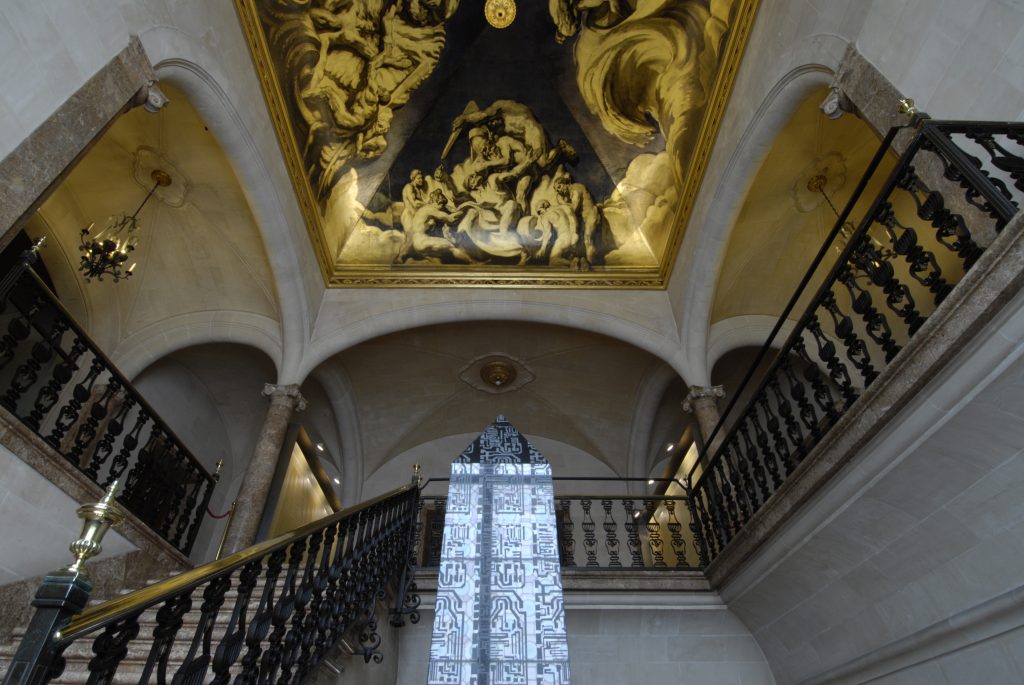
The staircase alone is a masterclass in theatrical allegory. Four enormous gold-on-blue compositions — Beauty, Strength, the Arts and Science — rise above the ascent. Aphrodite sits enthroned on a shell boat, a winged woman descending to help a suitor board; a lone rower battles a furious wave under the stern eye of History; a monk-like sage receives inspiration from three heavenly figures while the masses kneel at his feet; a tormented thinker wrestles with knowledge as Chronos and a spirit bearing a compass appear. But it’s the music room that remains his most joyous and audacious creation, a room entirely transformed into a striped circus tent of delicious theatricality.

This delirious fantasy was painted by a man who had spent decades at the summit of international art, dazzling the elite from Paris to New York. The Palma murals were not the work of a decorator in search of fame — they were the culmination of a long, spectacular, and often tumultuous career.
The Man Behind the Murals
José María Sert was born in Barcelona in 1874 into a wealthy textile family, but his path diverged early from that of his business-minded brothers. Art would run through the next generation too: his nephew, the architect Josep Lluís Sert, would later design Joan Miró’s celebrated studio in Palma. Drawn to art, José María mixed with Gaudí, Ramón Casas and Santiago Rusiñol, and by his twenties had established himself as a rising talent. After his father died, he left for Paris — the cultural capital of the world. Importantly, he did not arrive as a struggling bohemian. A comfortable inheritance allowed him to set up a grand house with a vast studio, the sort of place where his ambitions could take flight.
His breakthrough came in 1900 with a lavish Bacchanalian mural for La Maison de l’Art Nouveau. Exhibited at the Exposition Universelle, it was widely praised and set Sert on the path to becoming the most sought-after muralist in Europe. That same year he asked his friend, the Bishop of Vic, in Catalonia, to find him a small chapel in which to attempt a major work. Instead the bishop wrote: “You asked me for a chapel, and I offer you a cathedral.” And so, at just 26, Sert began decorating the colossal neoclassical cathedral of Vic, a project that would occupy him — off and on — for more than 30 years.
As his fame grew, he was increasingly seduced by lucrative commissions from aristocratic patrons in Paris, London and Madrid. Sert became part of the brilliant social world of the early 20th century. His circle included Proust, Gide, Cocteau, Diaghilev, Stravinsky and de Falla. He married the remarkable Misia Godebska, pianist and hostess of the most influential artistic salon in Paris, before leaving her for Roussy Mdivani, one of the famed “Marrying Mdivanis,” exiled Georgian aristocrats who married spectacularly into wealth and celebrity. Through this marriage Sert suddenly found himself connected to Barbara Hutton, the Astors, oil heiress Virginia Sinclair, a son of Arthur Conan Doyle, and Hollywood sirens such as Pola Negri and Mae Murray.
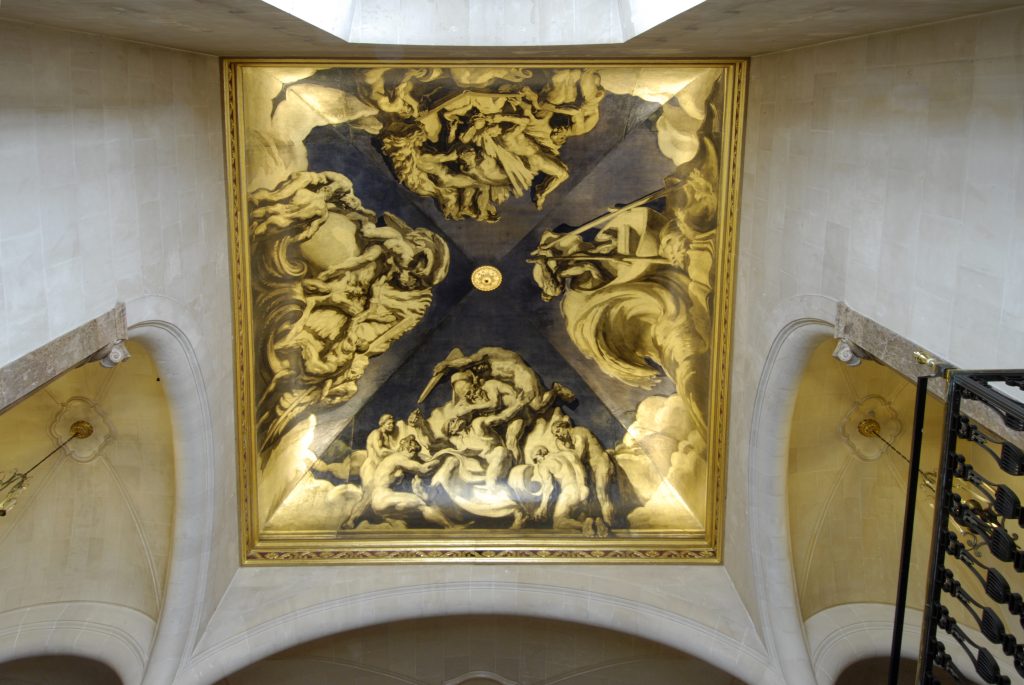
The Work — Glittering Rooms and Gilt Worlds
Sert’s murals were astonishingly ambitious. Compared to Tiepolo for their scale and virtuosity, they exploded into life with musicians, dancers, acrobats, mandarins, fabulous beasts, saints and sinners, caravans of camels and parades of elephants. He brought silver-screen glamour to the greatest rooms of Europe and America. He adorned the Waldorf Astoria with ribald Goyesque scenes, turned Sir Philip Sassoon’s London ballroom into an oriental dreamscape, painted ceilings for Palm Beach and a Rothschild château, and famously replaced Diego Rivera’s Rockefeller Center mural after Rivera included Lenin. “It is a great triumph. I have surpassed Rivera,” Sert declared.
Yet he was not merely a painter of fantasy. At the League of Nations in Geneva he depicted the brutality of war. And though many adored the joyous spectacle of his Paris commissions, others believed his greatest work was the Cathedral of Vic. Completed in 1930, it was destroyed during the Civil War in 1936. Sert spent the last years of his life painstakingly restoring it.
How He Worked — Theatre in the Workshop
Sert painted all his murals on canvas in his enormous Paris workshop. He then transported them to their intended home, refusing to allow them to be hung anywhere but the exact space he designed for them. His working method was as grand as his imagination: models and mannequins were posed and photographed; canvases were prepared with gold or silver leaf; a team of assistants blocked in the figures; Sert himself completed the final, decisive layers. The studio was equipped with an elevator for the giant canvases and a system of mirrors enabling him to judge foreshortening — essential for ceilings destined to be seen from far below.
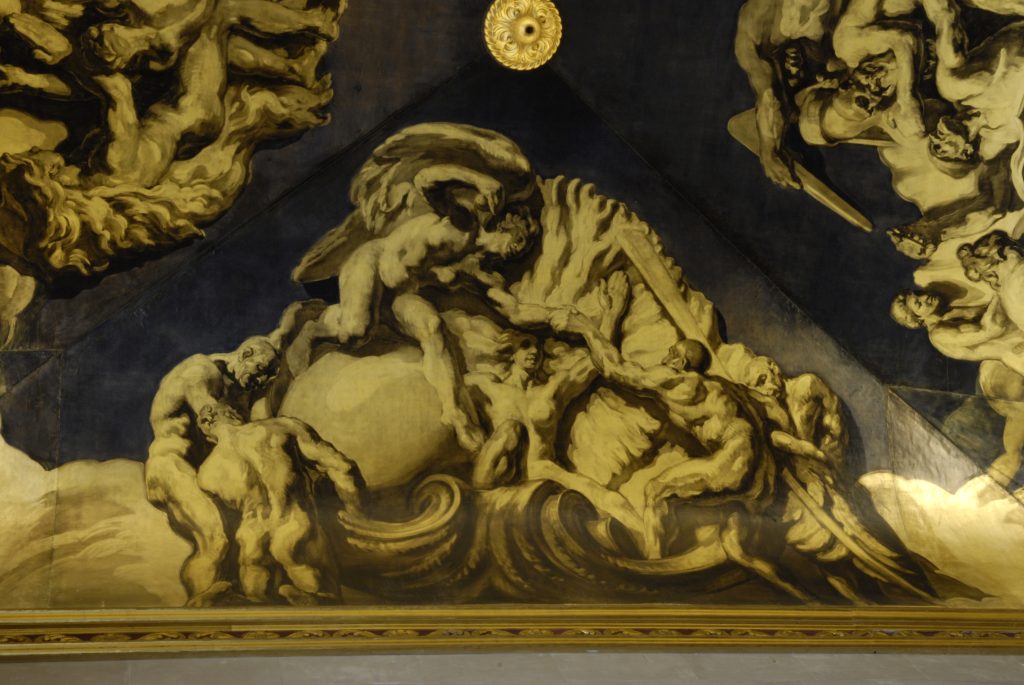
Return to Palma — The Final Masterpiece
By the time Joan March summoned Sert to Mallorca, the artist was at the peak of his fame. The palace project offered everything he loved: scale, drama, theatricality. The music room—with its circus skies, soaring acrobats and impossible illusions — was completed in 1944. Sert intended to retire on the island, but his health was failing and he still needed to oversee the reinstallation of his restored murals in Vic. His second wife Roussy had died in 1938, and his first, Misia — loyal in the end — returned to support him.
On 15 November 1945, a Te Deum was sung in Vic Cathedral as Sert’s restored murals were finally installed. Twelve days later he died. He was buried there, surrounded by the work that had defined his life.
Address
C/ Palau Reial, 18
Palma de Mallorca
Monday to Saturday 10:00a.m. to 5:30 p.m.
Last admission to the museum is 30 minutes before