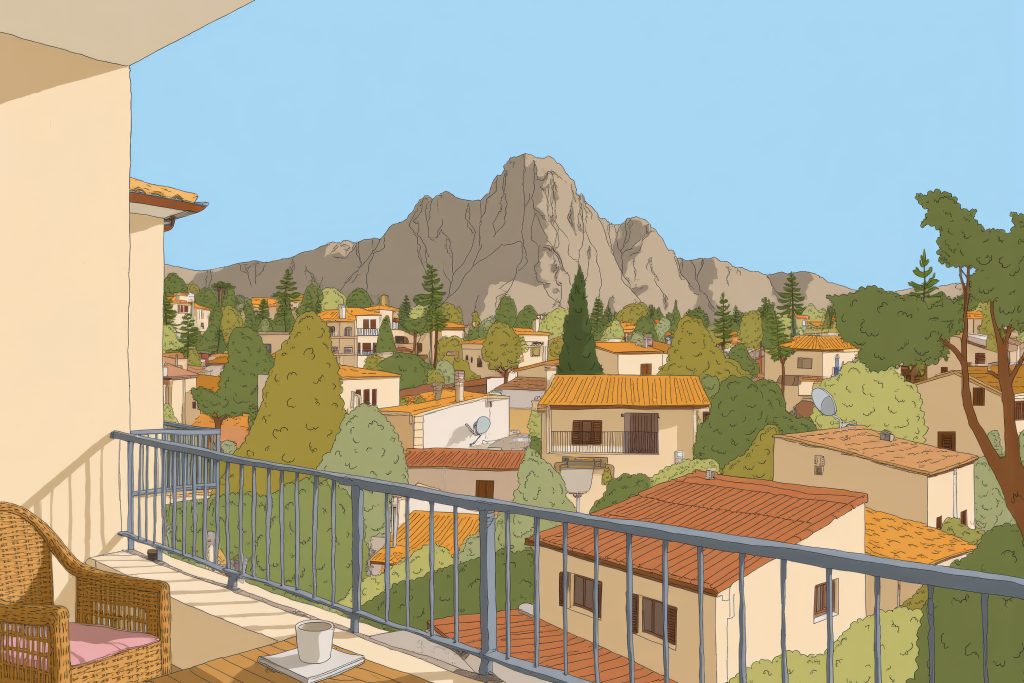
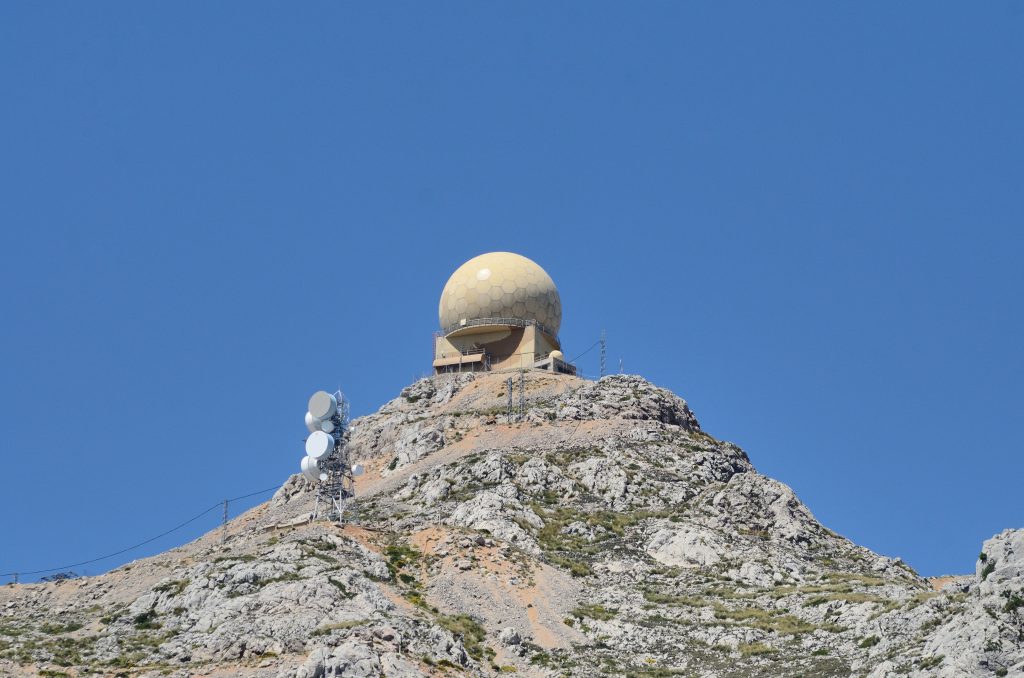
The illusion of choice and the reality of living in Mallorca.
On the continent, there is almost always a “Plan B“. If a market shrinks, you move. If a business niche closes, you pivot to the next city. Vast geography creates the illusion of infinite choice.
For those considering living in Mallorca, the options can seem limited, but the experience is rich and rewarding.
Recently, a friend visited me to scout locations for relocating his family, exploring the possibilities of living in Mallorca. For three days, we were in constant motion: crisscrossing the central plains, navigating the hairpin turns of the Tramuntana mountains, and descending into remote coves.
He loved it. But he chose the mainland.
His reason was visceral: he loves long-distance driving. For him, Mallorca felt too “finite.” On an island, every road inevitably returns you to the starting point or hits the sea within ninety minutes. On the continent, a road is a vector pointing toward infinity; something “different” always lies beyond the horizon. Here, there is only the same space.

The urban organism
The island quickly strips away the illusion of infinite choice — not just for drivers, but for the economy. Mallorca’s stability is deceptive. It looks robust until you ask the critical question: What happens when the flow stops growing? We used to view the island as a collection of isolated nodes — independent towns, resorts, and villages. But that view is obsolete. As researchers have noted, Mallorca has evolved into a single, tightly knit “urban organism”. From the coast to the mountains, the infrastructure, housing market, and labor force operate as a closed, hermetic system.
The primary vulnerability of this organism is simple: it has no emergency exit. On the mainland, an economic disruption can be distributed across space — it can be “diluted” by geography. On an island, a shock cannot be exported. It concentrates.

The trap of repeatability
Most of the Mallorca economy is built on repeatability rather than diversification. We offer the same services to meet the same expectations, year after year. Even our “innovations” are usually just variations of existing tourist models.
This creates a sense of comfort, but we must not confuse resilience with a lack of alternatives. Resilience without a “Plan B” isn’t a safety margin; it is a deferred risk. When your entire system is optimized for a single type of growth, any external shock — whether economic, climatic, or political — instantly becomes a localized crisis.
The digital paradox
Modern technology attempts to mask this vulnerability. Remote work allows a “second circuit” of the Mallorca economy to flourish, where people earn global salaries while physically residing in the Mediterranean.
But the Mallorca’s digital economy isn’t a “parallel city” — it’s a ghost layer that adds weight to the physical one. While the income may be global, the consumption is local. Digital nomads and remote tech workers still rely on the same overstretched schools, the same limited water supply, and the same finite roads. In housing, this pressure is especially visible: global purchasing power competes directly within a fixed, local housing stock, turning scarcity into a permanent condition rather than a cyclical one. Technology doesn’t provide an exit from the island’s limits; it merely increases the pressure on them.

The only door
The island is brutally honest. It is not a place for “growth at any cost”; it is a laboratory for a model capable of surviving a standstill.
My friend chose the mainland because he wanted the option to leave — the “vector toward infinity.” But the island is chosen by those ready to work with exactly what is beneath their feet. The question isn’t whether Mallorca’s economy can keep growing. The question is what we do when growth is no longer automatic.
An island is not a place to look for emergency exits. It is a place where you must understand exactly why you entered the only door available. Also read my post about Punto 1445.
Reach out our instagram account: Humans of Mallorca